Latvia, a Baltic nation with a rich medieval heritage and dramatic 20th-century struggles, has transformed from tribal lands to an EU and NATO member. The history of Latvia includes ancient Baltic roots, centuries of foreign rule, brief independence, Soviet occupation, and restored sovereignty since 1991. This timeline covers its path to the strong defense-focused state it is in 2026.
Ancient Baltic Peoples and Early History (9000 BCE–13th Century)
Human settlement began around 9000 BCE after the Ice Age. Baltic tribes (ancestors of Latvians, Lithuanians, and extinct Prussians) arrived around 2000 BCE, developing the Corded Ware culture. By the Iron Age, four main tribal groups Latgalians, Semigallians, Selonians, and Couronians controlled the territory, trading amber with Romans.
Christianization began in the 12th century via merchants and missionaries. The Northern Crusades brought German Teutonic Knights and the Livonian Order, who conquered the region by 1290, establishing feudal rule and building castles.

Historic Center of Riga – Everything Everywhere
German, Polish, Swedish, and Russian Rule (13th–1918)
Riga, founded in 1201, became a Hanseatic League powerhouse. After the Livonian War (1558–1583), control shifted among Poland-Lithuania, Sweden, and Russia. By 1795, the entire territory joined the Russian Empire.
The 19th century saw the Latvian National Awakening, with intellectuals promoting language, folklore, and identity. World War I chaos allowed Latvia to declare independence on November 18, 1918.
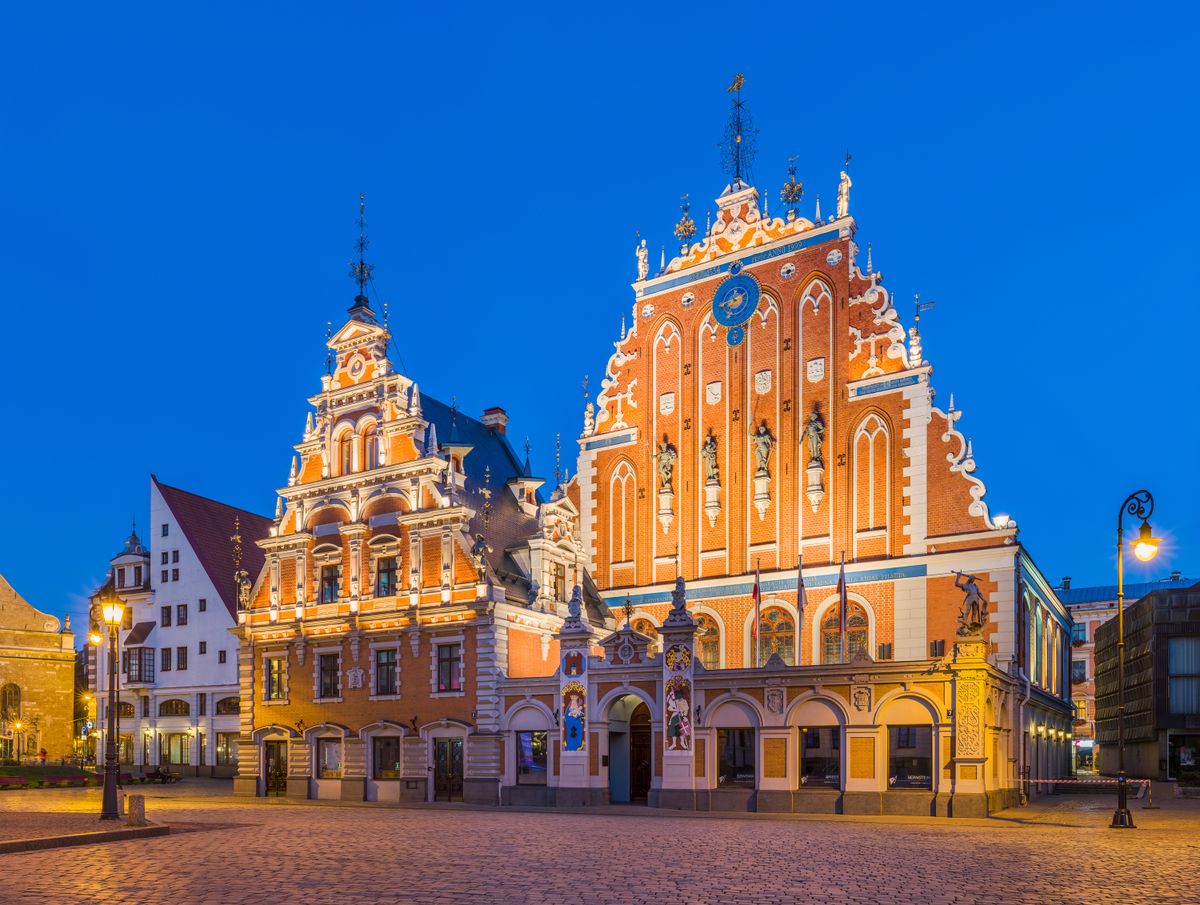
House of the Blackheads in Riga | Atlas Obscura
First Independence and Interwar Period (1918–1940)
The Latvian War of Independence (1918–1920) defeated Bolsheviks, Germans, and others. The democratic Republic of Latvia adopted a constitution in 1922. Economic growth followed, but political instability led to Kārlis Ulmanis’s 1934 coup and authoritarian rule.
Soviet and Nazi Occupations (1940–1944)
The 1939 Molotov-Ribbentrop Pact enabled Soviet annexation in 1940. Mass deportations followed. Nazi Germany occupied Latvia in 1941, implementing Holocaust atrocities (over 70,000 Jews killed). Soviet re-occupation in 1944 brought renewed repression.
Soviet Era and the Singing Revolution (1944–1991)
Latvia became the Latvian SSR. Collectivization, industrialization, and Russification occurred, with deportations in 1949. The late 1980s Singing Revolution mass song festivals and protests led to the independence declaration on May 4, 1990. Full restoration came on August 21, 1991, after the failed Moscow coup.
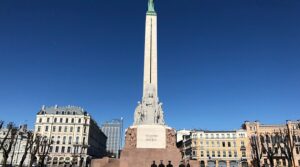
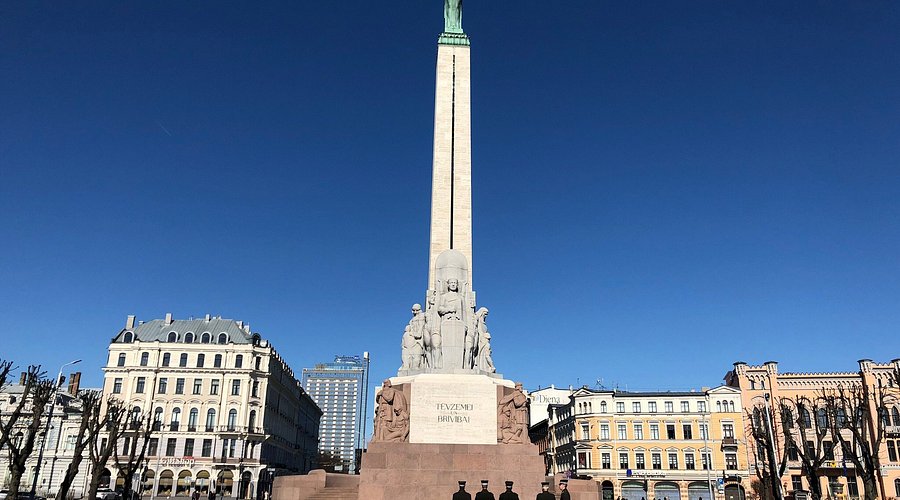
Freedom Monument (2026) All You MUST Know Before You Go (w/ Reviews)
Modern Latvia: EU, NATO, and Defense Focus (1991–2026)
Latvia joined the EU and NATO in 2004, adopting the euro in 2014. The 2008 crisis hit hard, but recovery was strong. Russia’s 2022 Ukraine invasion prompted massive defense hikes.
In 2025–2026, Latvia allocates ~4.9% of GDP to defense (aiming 5%), hosts NATO’s Canadian-led brigade (~4,000 troops), builds the Baltic Defence Line, and serves on the UN Security Council (2026–2027). Economy grows steadily (~2.25% projected 2026), with focus on resilience, cybersecurity, and support for Ukraine.