Supernovae are among the most spectacular and transformative events in the cosmos, marking the dramatic end of massive stars’ lives with explosions that can outshine entire galaxies. These cataclysmic blasts not only release immense energy but also play a pivotal role in the universe’s evolution, distributing essential elements, triggering new star formation, and influencing galactic structures. Understanding the impact of supernovae reveals how they recycle cosmic material, seed the building blocks of planets and life, and even help astronomers probe the universe’s expansion.
In this in-depth exploration, we’ll uncover the multifaceted effects of supernovae on the universe. From enriching interstellar space with heavy elements to generating shock waves that birth new stars, these explosions are fundamental to cosmic dynamics. Drawing on recent astronomical insights, this guide is perfect for anyone curious about how supernovae drive the cycle of creation and destruction in space. Whether you’re searching for “supernova effects on universe” or “role of supernovae in cosmology,” you’ll find comprehensive, science-backed information here.
What Are Supernovae? A Brief Overview
Supernovae occur when massive stars, typically eight times the Sun’s mass or more, exhaust their nuclear fuel and collapse under gravity. This collapse triggers a rebound explosion, ejecting outer layers at speeds up to 25,000 miles per second. There are two main types: Type Ia, from white dwarfs accreting mass in binary systems, and Type II, from core-collapse of massive stars.
These events are rare in human timescales occurring about every 50 years in a galaxy like the Milky Way but their energy output is staggering, equivalent to the Sun’s lifetime emission in seconds. The remnants, like neutron stars or black holes, continue to influence their surroundings long after the blast.
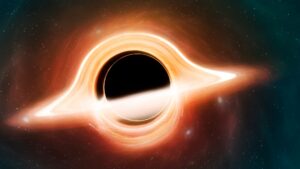
Also See : Black Holes Demystified, Understanding Their Formation and Cosmic Mysteries.
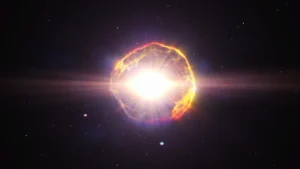
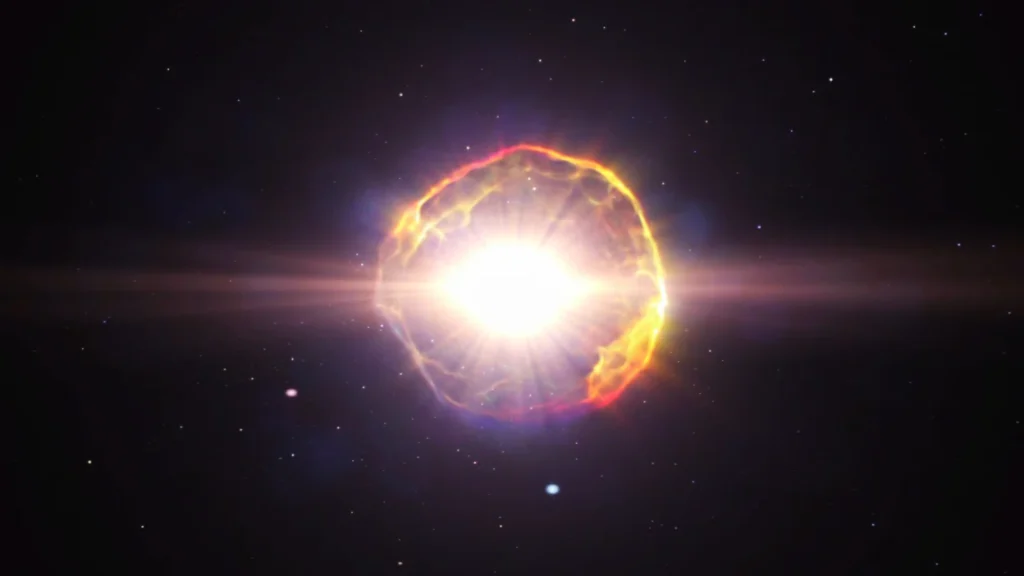
Visualizing a supernova’s fury helps grasp its scale.
This artist’s depiction captures the intense brightness and expanding shock wave of a core-collapse supernova.
Distributing Elements – The Chemical Enrichment of Space
One of the most profound impacts of supernovae is their role in synthesizing and dispersing heavy elements. Stars fuse hydrogen into helium and heavier elements up to iron during their lives, but elements beyond iron like gold, uranium, and platinum are forged in the extreme conditions of supernova explosions.
When a supernova erupts, it hurls these elements into interstellar space, enriching gas clouds that will form future stars and planets. Without this process, the universe would lack the diversity needed for rocky planets or life as we know it. For instance, the iron in your blood traces back to ancient supernovae.
This chemical seeding is evident in supernova remnants like the Crab Nebula, where ejected material mixes with the interstellar medium.
Triggering Star Formation Shock Waves as Cosmic Catalysts
Supernovae don’t just destroy; they create. The expanding shock waves from these explosions compress nearby gas and dust clouds, triggering gravitational collapse and new star formation. This process is crucial in star-forming regions like the Orion Nebula, where supernova remnants have been linked to bursts of stellar birth.
In dense galactic environments, multiple supernovae can create superbubbles, vast cavities that funnel material and promote further star clusters. This feedback loop regulates star formation rates, preventing galaxies from exhausting their gas too quickly.
Observations from telescopes like Hubble show how these waves sculpt interstellar medium, fostering the next generation of stars.
Generating Cosmic Rays and High-Energy Phenomena
Supernovae are major sources of cosmic rays – high-energy particles that permeate the universe and bombard Earth. Accelerated by shock waves, these rays include protons, electrons, and atomic nuclei traveling near light speed. They influence everything from cloud formation on planets to genetic mutations in life forms.
Nearby supernovae could have dramatic effects on Earth, potentially causing mass extinctions through radiation bursts that deplete ozone layers. Historical events like the Ordovician-Silurian extinction may link to such cosmic blasts.
Additionally, supernovae produce neutrinos and gamma rays, offering windows into extreme physics.
Influencing Galactic Evolution and Structure
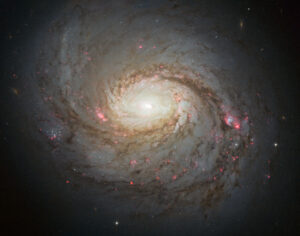
On a larger scale, supernovae shape galaxies. Their collective energy drives galactic winds, expelling gas and regulating star formation. In spiral galaxies, they contribute to the spiral arms’ structure by compressing gas.
Supernovae also aid in understanding cosmic expansion. Type Ia supernovae serve as “standard candles” for measuring distances, leading to the discovery of dark energy accelerating the universe.
In galaxy clusters, supernova remnants reveal the history of stellar populations and metal abundance.
Potential Dangers – Supernovae and Life in the Universe
While beneficial on cosmic scales, supernovae pose risks to life. A nearby explosion (within 30 light-years) could strip planetary atmospheres, causing extinctions. Evidence suggests past supernovae influenced Earth’s biodiversity.
However, their role in element distribution makes them essential for life emergence elsewhere.
The Legacy of Supernovae – Remnants and Ongoing Influence
Supernova remnants like Cassiopeia A continue to expand, interacting with space for thousands of years. These structures, visible in X-rays and radio waves, provide ongoing insights into cosmic processes.
Future telescopes like the James Webb will deepen our understanding of their long-term impacts.
In essence, supernovae are the universe’s recyclers, destroyers, and creators. Their explosions ensure the cosmos remains dynamic, fostering the conditions for stars, planets, and possibly life. Without them, the universe would be a sterile expanse of hydrogen and helium. (Word count: 812)