Microplastics tiny plastic particles smaller than 5 mm have now been found in human blood, lungs, and even placentas. What are the real risks, and how can we protect ourselves daily?
Common Sources of Microplastics in Daily Life
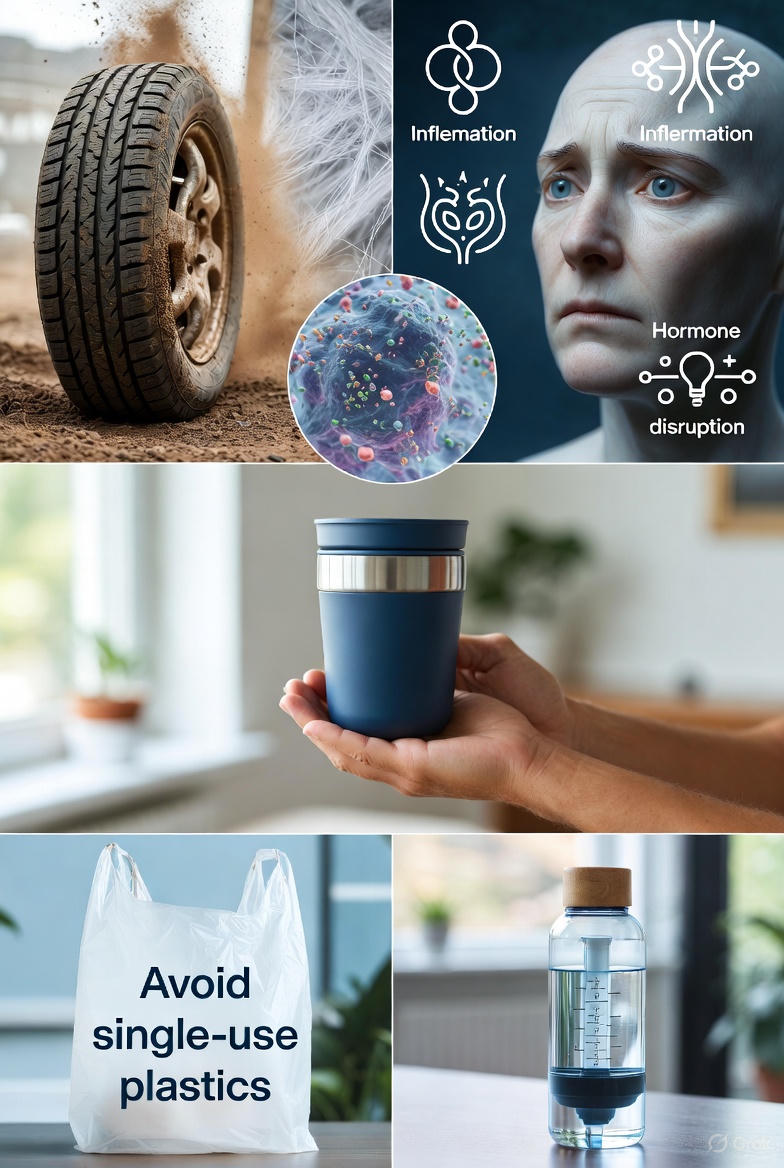
- Tire dust from vehicles (accounts for 40% of total microplastics)
- Synthetic fibers released when washing polyester clothing
- Microbeads in facial scrubs and toothpaste (banned in many countries since 2018)
- Breakdown of larger plastic waste in oceans and landfills
Health Risks of Microplastics
- Chronic inflammation
- Hormone disruption (from additives like BPA and phthalates)
- Carrying toxic chemicals into the body
- Possible increased cancer risk (still under research)
A 2024 study by Airlangga University found microplastics in 8 out of 10 samples of refillable gallon water in Surabaya.
10 Effective Ways to Reduce Microplastic Exposure
- Use a reusable tumbler and cloth shopping bag
- Avoid single-use food packaging
- Wash synthetic clothes in a special laundry bag (Guppyfriend)
- Choose natural-fiber clothing (cotton, linen, wool)
- Switch to bamboo toothbrushes and plastic-free toothpaste
- Drink filtered tap water instead of gallon refills
- Never heat food in plastic containers in the microwave
- Support brands with eco-friendly packaging
- Join beach and river clean-up events
- Educate family and neighbors
Reducing single-use plastics is the most powerful way to break the microplastic cycle.