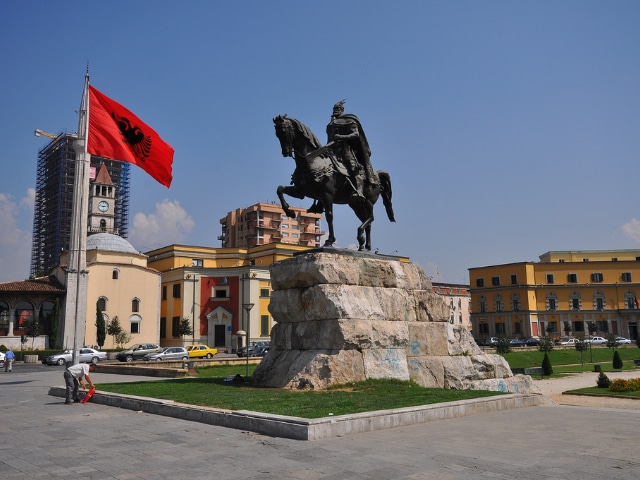
Albania, a captivating Balkan nation nestled between the Adriatic Sea and rugged mountains, boasts a history rich in resilience, cultural fusion, and dramatic transformations. Often called the “Land of the Eagles,” Albania has been a crossroads of civilization from ancient Illyrian tribes to Ottoman rule, communist isolation, and its current path toward European integration. This comprehensive overview explores the history of Albania, highlighting key eras, figures, and events that shaped this unique country.
Ancient Origins: Illyrians and Classical Empires
Albania’s roots trace back to prehistoric times, with evidence of human settlement dating to the Paleolithic era. The Illyrians, an Indo-European people, emerged around 1000 BCE as the dominant inhabitants.
- Illyrian Tribes: Known for their warrior culture, tribes like the Taulantii and Encheleae thrived in the region.
- Roman Conquest (168 BCE): Albania became part of the Roman province of Illyricum, with cities like Butrint flourishing as cultural hubs.
- Byzantine Era: After the Roman Empire split in 395 CE, Albania fell under the Eastern (Byzantine) Empire, adopting Christianity and blending Roman-Greek influences.
Iconic ancient sites like the UNESCO-listed Butrint National Park showcase theaters, baptisteries, and mosaics from this period.
Medieval Resistance and Ottoman Rule
The Middle Ages saw invasions by Slavs, Bulgars, and Normans, but Albania preserved its distinct identity.
- Skanderbeg’s Rebellion (1443–1479): National hero Gjergj Kastrioti, known as Skanderbeg, led a 25-year resistance against the Ottoman Empire, uniting Albanian princes and earning legendary status.
- Ottoman Conquest: By the late 15th century, Albania was fully incorporated into the Ottoman Empire, lasting over 400 years. Many Albanians converted to Islam, while Ottoman architecture flourished in cities like Berat and Gjirokastër.
Skanderbeg remains a symbol of Albanian independence, immortalized in statues across the country.
Preserved Ottoman-era towns like Berat (“City of a Thousand Windows”) and Gjirokastër are UNESCO World Heritage sites, featuring stone houses and fortresses.
Independence and 20th-Century Turmoil
Albania’s modern era began amid the decline of the Ottoman Empire.
- Independence (1912): Declared on November 28 in Vlorë during the First Balkan War, Albania emerged as a sovereign state.
- Monarchy and Instability: Prince Wilhelm of Wied briefly ruled, followed by Ahmet Zogu, who became King Zog I in 1928.
- World War II: Italy invaded in 1939, followed by German occupation. Partisans led by Enver Hoxha resisted, liberating the country in 1944.
Communist Era (1944–1991)
Enver Hoxha established a Stalinist regime, isolating Albania from the world.
- Isolation and Bunkers: Fear of invasion led to the construction of over 170,000 concrete bunkers.
- Atheist State: In 1967, Albania declared itself the world’s first atheist state, closing all religious sites.
Remnants of this era, like bunkers dotting the landscape and the transformed Pyramid of Tirana (originally Hoxha’s museum), stand as stark reminders.
Hoxha’s death in 1985 and the fall of communism in 1991 sparked chaotic transitions, including the 1997 pyramid scheme collapse.
Post-Communist Transition and Modern Albania
Since the 1990s, Albania has embraced democracy, market reforms, and Western integration.
- EU and NATO Aspirations: Joined NATO in 2009; EU candidate status since 2014, with accession negotiations ongoing.
- Economic Growth: Tourism booms along the stunning Albanian Riviera, driving recovery post-COVID and earthquakes.
- Current Developments (as of 2026): Under Prime Minister Edi Rama, Albania focuses on anti-corruption reforms, infrastructure, and EU alignment. Challenges include emigration and organized crime, but growth remains robust with tourism and renewables.
Tirana’s vibrant modern skyline reflects rapid urbanization and optimism.
The pristine beaches of the Albanian Riviera, like Ksamil, highlight the country’s emerging appeal as a Mediterranean gem.