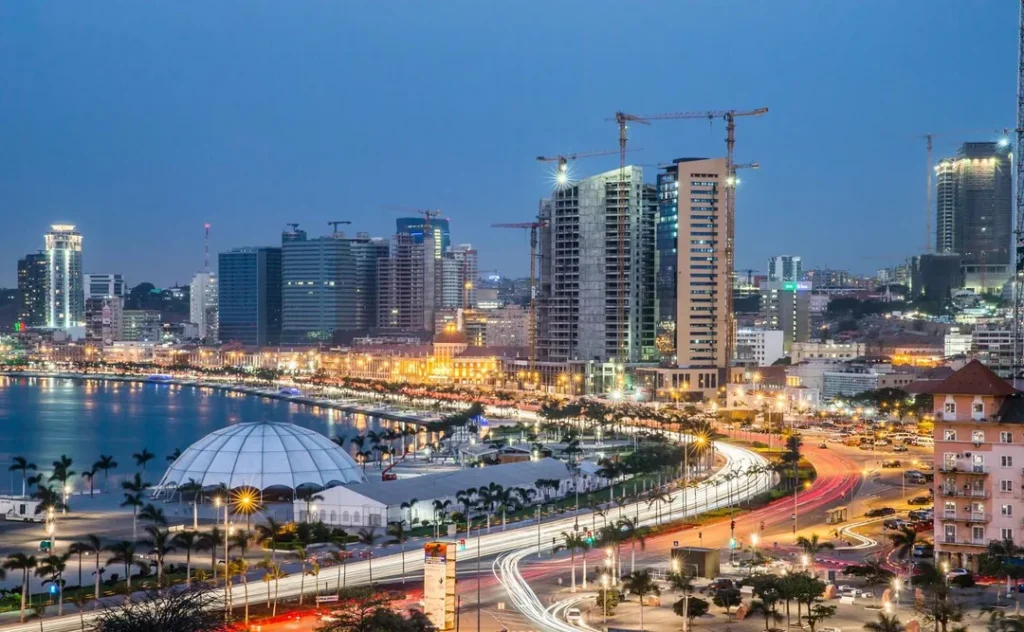
Located on the Atlantic coast of southern Africa, the Republic of Angola boasts a captivating history of Angola marked by powerful pre-colonial kingdoms, centuries of Portuguese colonialism, a hard-fought independence struggle, and a devastating civil war followed by remarkable reconstruction. Today, Angola is one of Africa’s leading oil producers, with a vibrant culture, diverse landscapes from savannas to beaches, and a growing economy. Its capital, Luanda, showcases modern skyscrapers alongside colonial architecture, symbolizing the nation’s journey from turmoil to renewal.
Pre-Colonial Era: Ancient Kingdoms and Bantu Migrations
The history of Angola begins in prehistoric times, with evidence of human habitation dating back to the Paleolithic era. Khoisan hunter-gatherers were among the earliest inhabitants. Around the last centuries BCE, Bantu-speaking peoples migrated into the region, introducing agriculture, ironworking, and pottery.
By the 13th century, powerful kingdoms emerged. The most prominent was the Kingdom of Kongo in the north, stretching from modern Gabon to the Kwanza River. It was a sophisticated state with a centralized monarchy, trade networks, and diplomatic ties.
Other key kingdoms included Ndongo (ruled by the Mbundu people), Matamba (famous for Queen Nzinga, who resisted Portuguese encroachment), and Lunda in the east. These societies thrived on agriculture, trade in ivory and copper, and complex social structures.
Portuguese Colonization and the Slave Trade (1483–19th Century)
Portuguese explorers, led by Diogo Cão, arrived in 1483, establishing contact with the Kingdom of Kongo. Initial relations were diplomatic, with Kongo’s king converting to Christianity. However, Portugal’s focus soon shifted to the lucrative slave trade.
Luanda was founded in 1575 as a major port. Angola became a primary source of enslaved Africans for Brazil and other colonies—over a million were shipped between 1580 and 1680 alone. Queen Nzinga of Ndongo and Matamba fiercely resisted Portuguese expansion in the 17th century, allying with the Dutch to challenge colonial forces.
By the 19th century, the slave trade was abolished (1836), but Portugal intensified control, conquering the interior after the 1884–85 Berlin Conference formalized colonial boundaries. Forced labor and resource extraction defined this era.
The Struggle for Independence (1950s–1975)
Post-World War II decolonization inspired Angolan nationalist movements. Key groups included the Marxist MPLA (Popular Movement for the Liberation of Angola), led by Agostinho Neto; FNLA (National Liberation Front of Angola); and UNITA (National Union for the Total Independence of Angola), led by Jonas Savimbi.
Armed rebellion began in 1961. A 1974 coup in Portugal led to the Alvor Accords, granting independence. On November 11, 1975, Angola declared independence amid chaos, with MPLA controlling Luanda.
The Angolan Civil War (1975–2002)
Independence sparked a brutal civil war fueled by Cold War rivalries. MPLA, backed by Cuba and the Soviet Union, faced FNLA and UNITA, supported by South Africa and the US. Cuban troops helped repel invasions, including the 1987–88 Battle of Cuito Cuanavale—a turning point.
The war devastated Angola, causing hundreds of thousands of deaths and displacing millions. Peace efforts faltered: elections in 1992 saw MPLA victory, but UNITA rejected results, resuming fighting. The war ended in 2002 after Savimbi’s death.
Modern Angola: Reconstruction and Growth
Since 2002, Angola has focused on rebuilding under long-time President José Eduardo dos Santos (1979–2017), succeeded by João Lourenço. Oil wealth drives the economy, though inequality persists. Luanda’s skyline reflects rapid modernization.
Natural wonders like Quiçama (Kissama) National Park highlight Angola’s biodiversity and tourism potential.
Key Timeline of Angola’s History
- 13th–15th centuries: Rise of Kingdom of Kongo and other states.
- 1483: Portuguese arrival.
- 1575: Founding of Luanda.
- 17th century: Queen Nzinga resists colonization.
- 1961: Start of armed independence struggle.
- 1975: Independence; civil war begins.
- 1992: First multiparty elections; war resumes.
- 2002: Death of Jonas Savimbi; civil war ends.
- 2017: João Lourenço becomes president.
- Present: Rapid economic growth, focus on diversification and infrastructure.
Angola’s history is one of resilience amid adversity. From ancient kingdoms to a dynamic modern nation, the history of Angola inspires with tales of resistance and rebirth. Discover its beaches, wildlife, and cultural heritage Angola awaits!