Nestled in the Leeward Islands of the Caribbean Sea, the twin-island nation of Antigua and Barbuda is renowned for its stunning beaches, vibrant culture, and resilient history. Boasting “365 beaches one for every day of the year,” Antigua, along with sister island Barbuda and uninhabited Redonda, offers turquoise waters, coral reefs, and luxury tourism. The history of Antigua and Barbuda spans ancient indigenous settlements, European colonization, the era of sugar plantations and slavery, and a triumphant path to independence. Today, this sovereign nation thrives on tourism, citizenship-by-investment programs, and cricket passion, with its colorful capital, St. John’s, blending colonial charm and modern vibrancy.
Pre-Columbian and Early Settlements
The history of Antigua and Barbuda begins with indigenous peoples. Archaic Age hunter-gatherers arrived around 2900 BC, followed by Arawak-speaking Saladoid people around AD 200–600, who introduced agriculture and pottery.
By the 13th century, Caribs (Kalina) dominated, but Christopher Columbus sighted the islands in 1493 during his second voyage, naming Antigua after a Seville church and Barbuda for its “bearded” fig trees.
European Colonization and the Sugar Era (17th-19th Century)
Early Spanish and French attempts failed due to Carib resistance and water scarcity. The British successfully colonized Antigua in 1632 under Sir Thomas Warner, with Barbuda following in 1685.
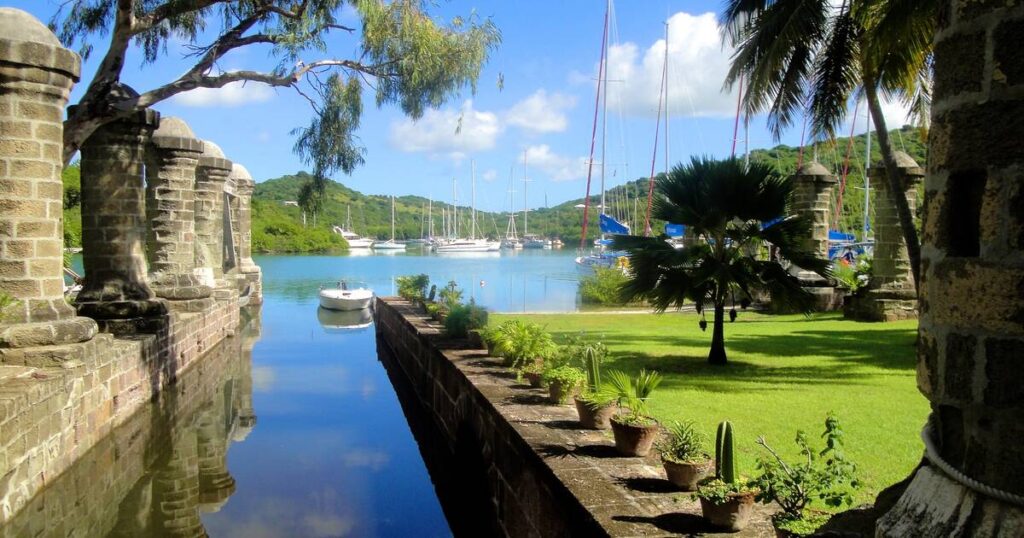
Sugar plantations boomed from the 1670s, relying on enslaved Africans. By the 18th century, Antigua became a key British naval base, with Nelson’s Dockyard—built in the 1700s and named after Admiral Horatio Nelson (stationed 1784–1787) serving as headquarters. This UNESCO World Heritage Site remains the world’s only continuously working Georgian-era dockyard.
Slavery was abolished in 1834, leading to emancipation and economic shifts. Barbuda’s history differed, with the Codrington family leasing it for farming and shipwreck salvage.
Path to Independence (20th Century)
Antigua and Barbuda joined the Leeward Islands Federation (1871–1956), then the West Indies Federation (1958–1962). Labor leader Vere Cornwall Bird founded the Antigua Labour Party (ALP) in the 1940s, pushing for self-governance.
Associated statehood came in 1967, with full internal autonomy. On November 1, 1981, Antigua and Barbuda gained independence as a constitutional monarchy within the Commonwealth, with Queen Elizabeth II as head of state (succeeded by King Charles III).
Modern Antigua and Barbuda: Challenges and Triumphs
Post-independence, the nation focused on tourism and offshore banking. Hurricanes like Luis (1995) and Irma (2017) which devastated Barbuda forces tested resilience, with international aid aiding recovery.
Today, Antigua and Barbuda enjoys high living standards, famous for sailing weeks, carnival festivals, and pristine beaches, including Barbuda’s pink sands.
The remote, rocky dependency of Redonda adds a quirky note, famously claimed as a “micronation” kingdom in literary lore.
St. John’s, the bustling capital, features colorful harbors and historic cathedrals.
Key Timeline of Antigua and Barbuda’s History
- c. 2900 BC: First human settlement.
- 1493: Columbus sights the islands.
- 1632: British colonization of Antigua.
- 1685: Colonization of Barbuda.
- 18th century: Peak of sugar economy and naval importance.
- 1834: Abolition of slavery.
- 1967: Associated statehood.
- 1981: Full independence.
- 2016: Nelson’s Dockyard named UNESCO site.
- Present: Leading Caribbean tourism destination.
The history of Antigua and Barbuda is a tale of endurance from indigenous roots and colonial struggles to a proud, paradise nation. Explore its beaches, historic sites, and warm hospitality Antigua and Barbuda beckons!