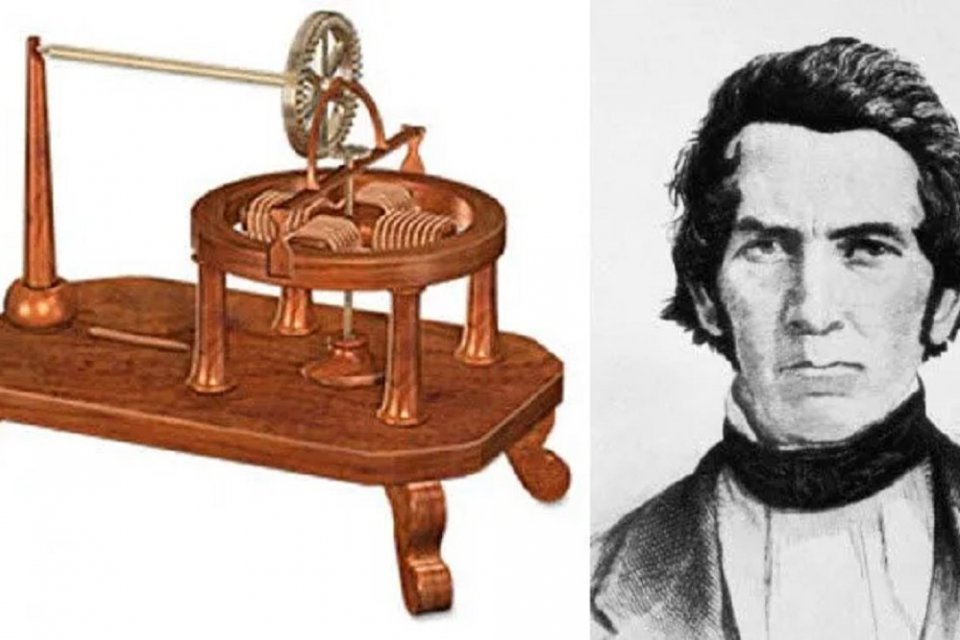
Direct Current (DC) electricity is the earliest form of electrical current known and used by humans. Unlike Alternating Current (AC), DC electricity flows in a single, constant direction. Although AC is more widely used today for large-scale power distribution, DC electricity has played a crucial role in the history of electrical technology and remains widely used in modern applications.
The Origins of DC Electricity
The history of DC electricity began in the late 18th century, when scientists sought ways to generate a stable and continuous flow of electric current. Before this period, electricity could only be observed through natural phenomena such as lightning or static electricity, which were difficult to control or apply practically.
A major breakthrough occurred in 1800 when Italian scientist Alessandro Volta invented the world’s first electric battery, known as the Voltaic Pile. This device consisted of alternating layers of zinc and copper separated by cloth soaked in an electrolyte solution. For the first time, humans were able to generate a continuous supply of DC electricity.
Volta’s invention marked a turning point in scientific history, as it allowed electricity to be produced reliably without relying on unpredictable natural events.
The Development of DC Electricity in the 19th Century
Following the invention of the battery, research into DC electricity expanded rapidly. Scientists and engineers began developing electrical devices such as motors, telegraph systems, and early lighting technologies based on direct current.
In the mid-19th century, DC electricity became essential for communication systems, particularly the telegraph. The steady and predictable nature of direct current made it ideal for transmitting electrical signals over long distances at the time.
Thomas Alva Edison became the most prominent figure in the history of DC electricity. In 1879, Edison successfully developed a practical and long-lasting incandescent light bulb powered by DC electricity. He later built the world’s first commercial DC power station, the Pearl Street Station in New York City, which began operation in 1882.
This power station supplied DC electricity to nearby homes and businesses, marking the beginning of the commercial electric power industry.
Advantages and Limitations of DC Electricity
DC electricity offers several important advantages, particularly its stable voltage and ease of storage. Electrical energy in DC form can be stored in batteries and used when needed. This makes DC electricity ideal for portable devices and electronic systems.
However, DC electricity also has significant limitations, especially in long-distance power transmission. At the time, DC voltage could not be easily increased or decreased, resulting in substantial energy losses over long transmission distances. As a result, DC power stations had to be located close to consumers.
These limitations eventually led to competition between DC and AC power systems.
The War of Currents: DC vs AC
In the late 19th century, a major technological rivalry emerged, known as the War of Currents. Thomas Edison strongly supported DC electricity, while Nikola Tesla and George Westinghouse promoted AC electricity.
AC electricity had a major advantage in long-distance transmission because its voltage could be easily transformed using transformers. This made AC more efficient and cost-effective for large-scale distribution.
Ultimately, AC electricity won the competition and became the global standard for power distribution. However, this did not mark the end of DC electricity.
The Role of DC Electricity in the Modern Era
Despite losing dominance in mass power distribution, DC electricity remains the foundation of many modern technologies. Almost all electronic devices, including computers, smartphones, televisions, and digital equipment, operate using DC electricity. Power adapters and chargers convert AC electricity into DC to meet device requirements.
Renewable energy sources such as solar panels naturally generate DC electricity. Electric vehicles, energy storage systems, and data centers also rely heavily on direct current.
Moreover, modern transmission technologies such as High Voltage Direct Current (HVDC) are now used to transmit electricity over long distances with high efficiency, proving that DC electricity continues to evolve and remain relevant.
The history of DC electricity demonstrates that direct current is the foundation of electrical development. From Volta’s battery to modern electronic devices, DC electricity has played an essential role in technological progress.
Although once overshadowed by AC electricity, DC is becoming increasingly important in the digital age and the renewable energy sector. With ongoing technological advancements, direct current is not only a part of history but also a key component of the future of global electrical systems.