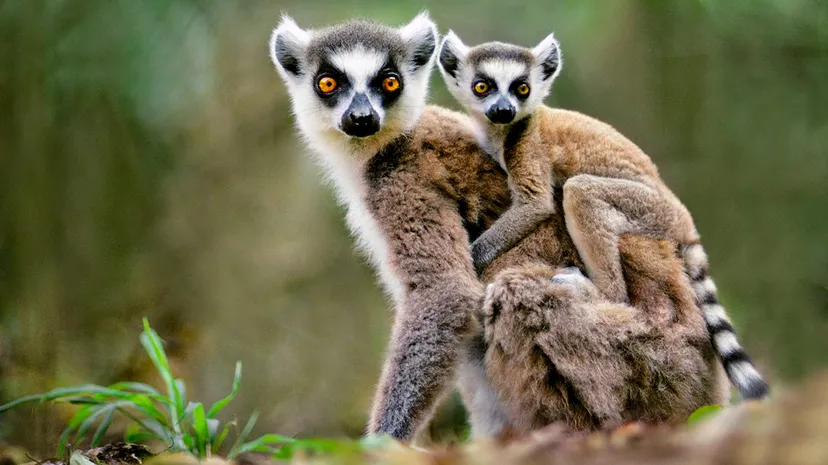
Madagascar, the world’s fourth-largest island located off the southeastern coast of Africa in the Indian Ocean, has a fascinating and distinctive history. Separated from the mainland by the Mozambique Channel, it developed in remarkable isolation, leading to extraordinary biodiversity (with over 90% of its wildlife found nowhere else) and a unique cultural blend. Unlike most African nations, its people trace much of their ancestry to Southeast Asia rather than the continent next door.
This SEO-optimized guide covers the key chapters of Madagascar’s history from prehistoric origins to modern challenges perfect for anyone researching the island’s past, its independence story, or why it’s called the “Red Island.”
Geological Origins and Human Settlement (Millions of Years Ago – 1st Millennium CE)
Madagascar’s story begins long before humans arrived:
- Around 180 million years ago, it split from the supercontinent Gondwana (along with Africa).
- About 90 million years ago, it separated from India, drifting into isolation.
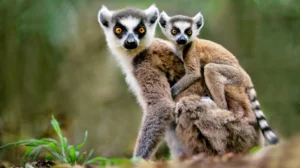
This long separation created one of the planet’s richest biodiversity hotspots, with lemurs, chameleons, baobabs, and unique plants evolving independently.
Human arrival came surprisingly late compared to mainland Africa:
- First settlers: Austronesian peoples (likely from Borneo/South Indonesia) arrived by outrigger canoes around 350–700 CE (some estimates suggest as early as 200 BCE–500 CE).
- These seafarers brought rice cultivation, outrigger boats, and Southeast Asian cultural elements.
- From the 9th century onward, Bantu-speaking groups from East Africa crossed the Mozambique Channel, adding African genetic, linguistic, and cultural influences.
- The resulting Malagasy people represent a roughly equal mix of Asian (Austronesian) and African (Bantu) ancestry, speaking Malagasy an Austronesian language with Bantu, Arabic, and later French influences.
Arab traders established coastal posts from the 7th–9th centuries, introducing Islam and trade networks.
European Contact and the Rise of Kingdoms (16th–19th Centuries)
- 1500: Portuguese explorer Diogo Dias sights Madagascar first confirmed European contact.
- 17th century: French and British attempt settlements; pirates (including Captain Misson’s legendary Libertatia utopia on Île Sainte-Marie) use it as a base from the 1680s–1720s.
- Coastal trading posts grow, but the interior remains under local control.
Powerful kingdoms emerged:
- Sakalava kingdoms dominate the west and north in the 17th–18th centuries.
- Merina Kingdom (centered on the highlands around Antananarivo) rises in the late 18th century under rulers like Andrianampoinimerina.
- By the early 19th century, under Radama I (r. 1810–1828), the Merina unify much of the island, modernize the army, adopt literacy (using Latin script for Malagasy), and sign treaties (including with Britain to abolish the slave trade in 1820).
Queen Ranavalona I (r. 1828–1861) pursues isolationist and anti-Christian policies, leading to harsh persecution of missionaries and converts—but the kingdom remains independent.
French Colonization (1895–1960)
- Late 19th century: France seeks control amid European “Scramble for Africa.”
- 1883–1885: Franco-Malagasy wars; France declares a protectorate.
- 1895: French forces capture Antananarivo; Queen Ranavalona III is exiled.
- 1896: France fully annexes Madagascar as a colony; General Gallieni becomes governor and consolidates rule.
- Colonial era brings infrastructure (railways, roads), cash crops (vanilla, coffee), but also forced labor, land expropriation, and cultural suppression.
1947: Major nationalist uprising in the east is brutally suppressed, killing tens of thousands.
Independence and Modern Era (1960–Present)
- June 26, 1960: Madagascar gains independence from France as the Malagasy Republic, with Philibert Tsiranana as first president.
- 1970s: Socialist shift under Didier Ratsiraka (1975–1993), who nationalizes industries and aligns with the Soviet bloc.
- 1990s: Multiparty democracy returns; Ratsiraka loses power amid economic crisis.
- 2001–2002: Disputed election leads to crisis between Marc Ravalomanana and Ratsiraka.
- 2009: Coup ousts Ravalomanana; Andry Rajoelina takes power.
- 2018–present: Rajoelina returns as president after elections, but political instability persists including recent 2025 Gen Z protests over power/water shortages, leading to government dissolution, impeachment attempts, and military involvement.
Today, Madagascar remains a republic with French as an official language alongside Malagasy. It faces challenges like poverty, environmental threats (deforestation), and climate vulnerability but boasts vibrant culture, stunning landscapes, and status as the world’s top vanilla producer.
Key Timeline of Madagascar History
- ~180 MYA: Splits from Africa (Gondwana breakup).
- ~350–700 CE: First Austronesian settlers arrive.
- 1500: Portuguese sighting by Diogo Dias.
- 1810–1828: Merina unification under Radama I.
- 1896: French annexation.
- 1947: Nationalist rebellion crushed.
- 1960: Independence achieved.
- 1975: Didier Ratsiraka begins long rule.
- 2009: Coup d’état.
- 2025: Recent protests and political upheaval.
Madagascar’s history reflects resilience: a distant island that forged a distinct identity through Asian-African fusion, resisted full colonization longer than many neighbors, and continues navigating modern challenges while preserving one of Earth’s most extraordinary natural heritages.
Planning a trip to see lemurs in Andasibe or explore royal palaces in Antananarivo? Understanding this background makes the island’s unique story even more captivating!