Mali, located in West Africa, holds one of the richest and most influential histories on the African continent. Long before European colonization, Mali was home to powerful empires that controlled vast trade networks and became centers of learning, wealth, and Islamic scholarship.
Early Kingdoms and the Rise of the Ghana Empire
Before the formation of Mali as a nation, the region was dominated by powerful kingdoms. One of the earliest was the Ghana Empire, which flourished between the 6th and 13th centuries. Although not located entirely within modern Mali’s borders, its influence shaped the region’s political and economic foundations.
The Ghana Empire grew wealthy through control of trans-Saharan trade routes, particularly gold and salt. These trade networks connected West Africa with North Africa and the Mediterranean world.
The Mali Empire and Mansa Musa
The Mali Empire emerged in the 13th century under the leadership of Sundiata Keita, who founded the empire around 1235. Under his rule, Mali expanded rapidly and became one of the largest empires in African history.
Also See : The History of Luxembourg From a Tiny Fortress to One of Europe’s Wealthiest Nations
The empire reached its peak during the reign of Mansa Musa in the 14th century. Mansa Musa is often described as one of the richest individuals in history. His famous pilgrimage to Mecca in 1324 showcased Mali’s immense wealth. He distributed so much gold during his journey that it reportedly affected gold prices in parts of the Middle East.
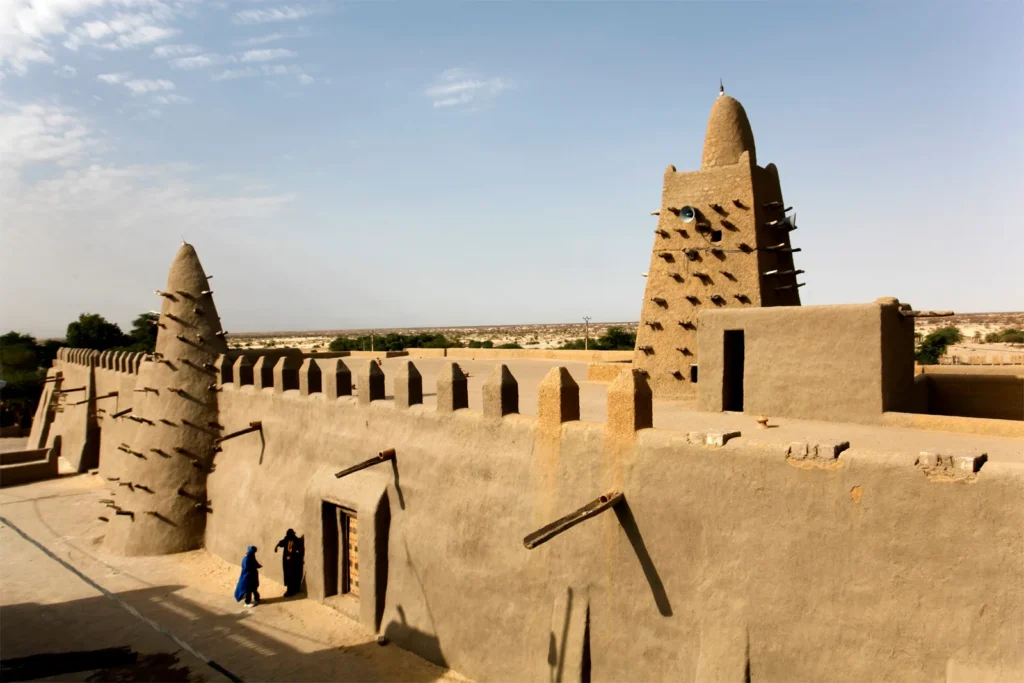
Under Mansa Musa, cities such as Timbuktu and Djenné became renowned centers of Islamic learning. Timbuktu, in particular, housed libraries and universities that attracted scholars from across the Islamic world.
Songhai Empire and Regional Shifts
After the decline of the Mali Empire in the 15th century, the Songhai Empire rose to power. Centered in Gao, the Songhai Empire became the largest state in West African history during the 15th and 16th centuries.
However, in 1591, Moroccan forces invaded and defeated Songhai, weakening centralized power in the region. This marked the end of large-scale imperial dominance in the area for centuries.
French Colonization
In the late 19th century, European powers began colonizing Africa during the period known as the Scramble for Africa. Mali became part of French West Africa and was called French Sudan.
Under French rule, local political systems were replaced by colonial administration. The French exploited resources and restructured the economy to serve colonial interests. Despite this, resistance movements and nationalist ideas gradually grew throughout the early 20th century.
Independence and Formation of the Republic
Mali gained independence from France on September 22, 1960. Initially, it formed the Mali Federation with Senegal, but the union dissolved shortly after independence. Mali then became an independent republic.
The country’s first president, Modibo Keita, pursued socialist policies and centralized governance. However, political instability followed, including military coups and authoritarian rule.
Contemporary Challenges and Cultural Legacy
In recent decades, Mali has faced political instability, armed conflict in the northern regions, and economic challenges. Despite these difficulties, Mali remains culturally rich and historically significant.
The legacy of the Mali Empire continues to inspire national pride. Timbuktu is still recognized as a symbol of intellectual achievement in African history. Traditional music, art, and oral storytelling remain important elements of Malian identity.
The history of Mali is a powerful narrative of empire, wealth, scholarship, colonization, and resilience. From the legendary wealth of Mansa Musa to the struggles of modern statehood, Mali has played a crucial role in shaping West African and global history.
Today, Mali stands as a nation deeply rooted in its imperial past while striving to overcome modern political and economic challenges. Its historical contributions to trade, culture, and Islamic scholarship remain among the most remarkable in world history.