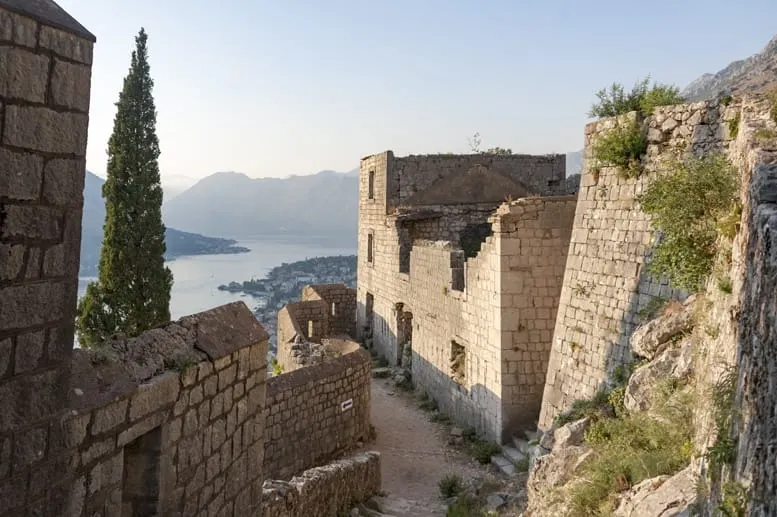
Montenegro is a small country located in Southeastern Europe on the Adriatic coast. Despite its modest size, Montenegro has a long and complex history shaped by wars, empires, and a strong national identity that developed over centuries.
Early Civilizations and Ancient Influence
The region that is now Montenegro was originally inhabited by Illyrian tribes. Later, it became part of the Roman Empire after the Romans conquered the western Balkans. After the fall of Rome, the area came under the influence of the Byzantine Empire, which introduced Christianity and new cultural traditions.
During the early medieval period, Slavic tribes settled in the region and formed early states that laid the foundation for modern Montenegrin identity.
Also See : The Fascinating History of Mexico – From Ancient Civilizations to a Modern Nation
The Medieval Kingdom of Zeta
One of the earliest important political entities in the region was the medieval state of Zeta. Zeta was often connected to neighboring Serbian kingdoms but maintained a degree of independence. The mountainous terrain helped local rulers defend their lands against outside powers.
Resistance Against the Ottoman Empire
In the 15th century, the powerful Ottoman Empire expanded into the Balkans. Much of the region fell under Ottoman rule, but Montenegro maintained a unique level of autonomy thanks to its rugged mountains and strong warrior traditions.
Local leaders, including religious rulers known as prince-bishops, governed Montenegro while organizing resistance against Ottoman forces for centuries.
The Petrović-Njegoš Dynasty
In the late 17th century, the House of Petrović-Njegoš emerged as the dominant ruling family. Under their leadership, Montenegro gradually strengthened its independence and developed its national institutions.
One of the most influential leaders was Petar II Petrović-Njegoš, a ruler, philosopher, and poet who played an important role in shaping Montenegrin culture and identity.
Independence, Yugoslavia, and Modern Montenegro
Montenegro gained international recognition as an independent kingdom in 1878 at the Congress of Berlin. However, after World War I, the country became part of the Kingdom of Yugoslavia.
Following the breakup of Yugoslavia in the 1990s, Montenegro remained in a union with Serbia until a referendum in 2006 led to full independence.
Today, Montenegro is an independent European nation known for its stunning Adriatic coastline, historic towns, and growing tourism industry.