Panama is a strategically located country in Central America, connecting North and South America while serving as a gateway between the Atlantic and Pacific Oceans. Its history is shaped by indigenous civilizations, colonial rule, and the construction of one of the most important engineering projects in the world. Today, Panama is known for its global trade influence and the famous Panama Canal.
Indigenous Civilizations Before European Contact
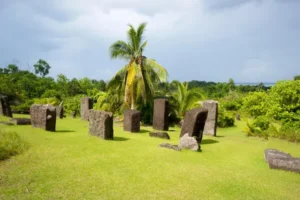
Long before European explorers arrived, the region now known as Panama was inhabited by indigenous groups such as the Cueva, Coclé, and Ngäbe peoples. These societies developed complex cultures based on agriculture, fishing, and trade networks that connected communities across Central America.
Archaeological discoveries show that these early inhabitants produced intricate gold artifacts, pottery, and textiles, reflecting a rich cultural heritage.
Also See : “The History of Moldova”From Ancient Principality to Modern European Nation
Spanish Exploration and Colonial Rule
Panama became a key location for Spain after the arrival of Spanish explorers in the early 16th century. In 1513, Spanish explorer Vasco Núñez de Balboa famously crossed the Isthmus of Panama and became the first European to see the Pacific Ocean from the Americas.
During Spanish colonial rule, Panama served as an important transit point for gold and silver being transported from South America to Spain. The region played a major role in Spain’s colonial trade network.
From Spanish Rule to Colombian Control
In 1821, Panama declared independence from Spain and chose to join Gran Colombia, a republic that also included modern-day Colombia, Venezuela, and Ecuador. After the dissolution of Gran Colombia, Panama remained part of Colombia throughout the 19th century.
During this period, the idea of building a canal across the isthmus began to attract global attention due to the region’s strategic location.
Independence and the Panama Canal
In 1903, Panama declared independence from Colombia with support from the United States. Shortly afterward, the United States began construction of the Panama Canal, one of the most ambitious engineering projects in history.
Completed in 1914, the canal dramatically shortened shipping routes between the Atlantic and Pacific Oceans and quickly became one of the most important waterways in global trade.
The Return of the Canal and Modern Development
For many decades, the Panama Canal was controlled by the United States. However, agreements signed in 1977 led to the gradual transfer of control to Panama, which was completed in 1999.
Today, the canal is fully operated by Panama and remains a vital component of the country’s economy.
Panama Today
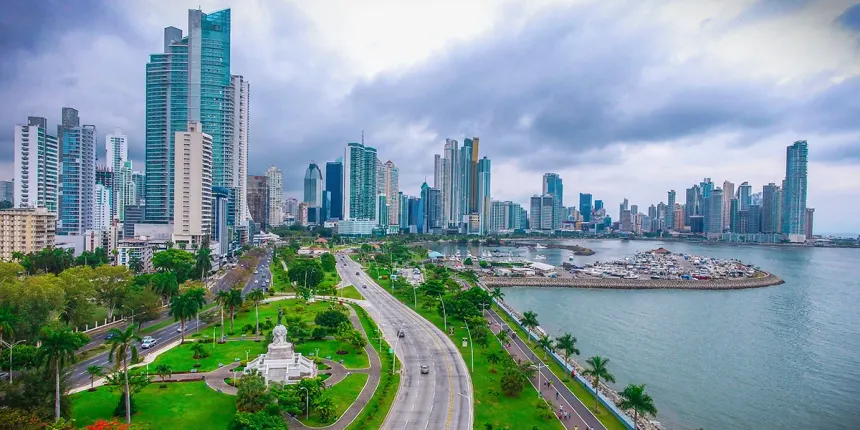
Modern Panama is a rapidly developing nation known for its international banking sector, strong logistics industry, and strategic role in global commerce. Its unique history shaped by geography, trade, and international cooperation continues to define its place in the world.