Spanning most of the Arabian Peninsula, the Kingdom of Saudi Arabia is a land of profound historical significance, home to Islam’s two holiest cities, vast deserts, ancient archaeological wonders, and immense oil wealth. The history of Saudi Arabia weaves together prehistoric settlements, thriving trade routes, the birthplace of Islam, Ottoman and tribal rule, unification under the Al Saud family, and rapid modernization through Vision 2030. Today, with its capital Riyadh as a bustling metropolis and cities like Jeddah and Mecca drawing millions, Saudi Arabia blends deep cultural heritage with ambitious future projects, making it a top destination for religious pilgrimage, tourism, and business.
Ancient Arabia: Trade Routes and Early Kingdoms
The history of Saudi Arabia traces back to prehistoric times, with evidence of human activity dating to the Stone Age. The peninsula was a crossroads for ancient civilizations, including Dilmun in the east and thriving incense trade routes linking Yemen to the Mediterranean.
Notable sites include Al-Ula and Hegra (Madain Saleh), a UNESCO World Heritage site with Nabataean tombs similar to Petra, carved into rock faces over 2,000 years ago.
Pre-Islamic Arabia featured polytheistic tribes, with Mecca as a religious and commercial hub centered around the Kaaba.
The Rise of Islam (7th Century)
In 610 CE, Prophet Muhammad received his first revelation in Mecca, founding Islam. By his death in 632 CE in Medina, most of Arabia was unified under Islam.
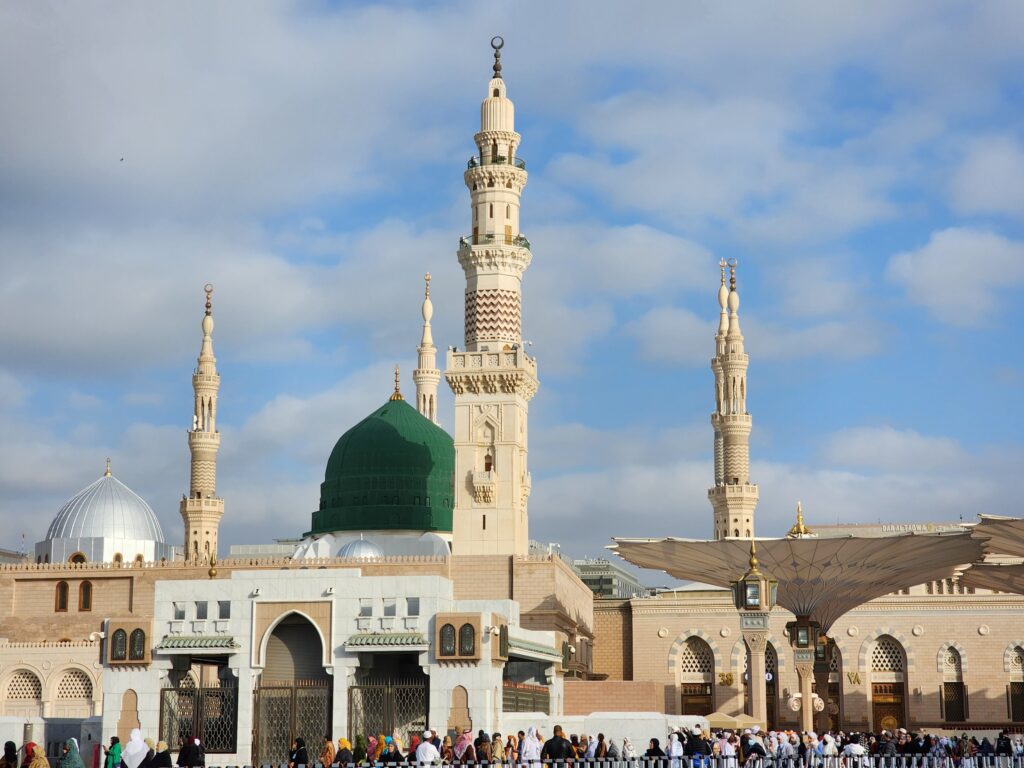
The holy cities of Mecca (birthplace of the Prophet and site of the Kaaba) and Medina (location of the Prophet’s Mosque) remain central to Muslim faith, attracting millions for Hajj and Umrah pilgrimages annually.
Ottoman Era and the Al Saud Dynasties (16th–19th Century)
From the 16th century, much of the region fell under Ottoman control, though local emirates maintained autonomy. The Al Saud family allied with Muhammad ibn Abd al-Wahhab in 1744, founding the First Saudi State based on Wahhabi reformist Islam.
This state expanded but collapsed in 1818. A Second Saudi State emerged in 1824, lasting until 1891. Historic Jeddah’s Al-Balad district reflects this era’s coral architecture and trade importance.
Unification and the Modern Kingdom (1902–1932)
In 1902, Abdulaziz Al Saud (Ibn Saud) recaptured Riyadh, launching a 30-year campaign to unify the peninsula. By conquering Hejaz in 1925, he controlled Mecca and Medina.
On September 23, 1932, he proclaimed the Kingdom of Saudi Arabia, establishing the third and current Saudi state.
Oil Discovery and Economic Boom (20th Century)
Oil was discovered in 1938 by American geologists, with commercial production starting post-WWII. The 1970s oil boom transformed Saudi Arabia into a global economic powerhouse, funding infrastructure and welfare.
Kings like Faisal (1964–1975) modernized education and society while maintaining Islamic traditions.
Contemporary Saudi Arabia: Vision 2030 and Reforms
Under King Salman (since 2015) and Crown Prince Mohammed bin Salman, Vision 2030 diversifies the economy beyond oil, boosting tourism, entertainment, and women’s rights (e.g., driving allowed in 2018).
Projects like NEOM and Red Sea resorts highlight innovation, while preserving heritage sites.