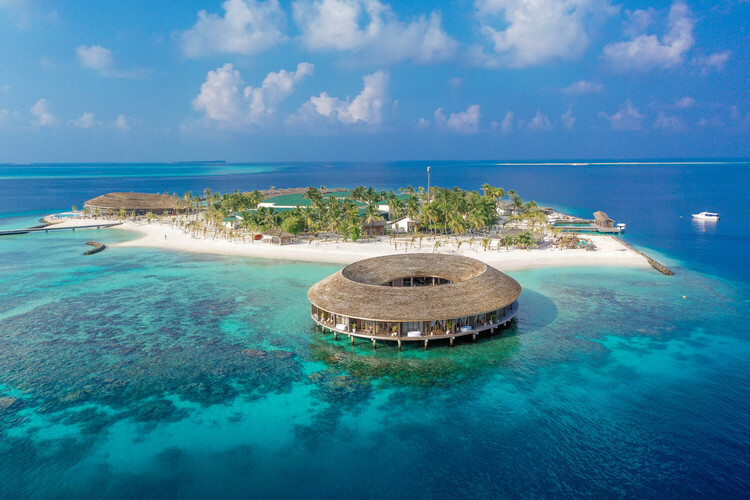
The Maldives is widely known today as a tropical paradise filled with turquoise lagoons and overwater villas. However, the history of the Maldives is just as fascinating as its natural beauty. This island nation in the Indian Ocean has experienced centuries of trade, religious transformation, colonial influence, and political evolution before becoming the modern republic we know today.
Early Settlements and Buddhist Era
Archaeological evidence suggests that the Maldives was first settled around the 5th century BCE. Early settlers likely came from Sri Lanka and southern India. Due to its strategic location along ancient maritime trade routes in the Indian Ocean, the Maldives quickly became a stopping point for traders traveling between Arabia, East Africa, India, and Southeast Asia.
Also See : The History of Luxembourg From a Tiny Fortress to One of Europe’s Wealthiest Nations
Before Islam became the dominant religion, the Maldives was heavily influenced by Buddhism. Historians believe Buddhism was introduced around the 3rd century BCE during the reign of Emperor Ashoka in India. For more than a thousand years, Buddhist culture shaped Maldivian society. Remains of ancient stupas and monasteries discovered across the islands confirm this long Buddhist period.
Conversion to Islam in the 12th Century
One of the most defining moments in Maldivian history occurred in 1153 CE when the kingdom officially converted to Islam. According to traditional accounts, a North African scholar played a key role in converting the ruling monarch. The king embraced Islam and adopted the name Sultan Muhammad al-Adil, marking the beginning of an Islamic sultanate that would last for centuries.
Islam became deeply embedded in Maldivian identity. The legal system, education, and governance structures were shaped by Islamic principles. Even today, the Maldives remains a 100 percent Muslim country under its constitution.
Portuguese, Dutch, and British Influence
Due to its strategic location, the Maldives attracted European colonial powers. In the 16th century, the Portuguese briefly controlled the islands from 1558 to 1573. Their rule was unpopular and ended after a local uprising led by national hero Muhammad Thakurufaanu.
Later, the Dutch, who controlled Sri Lanka, exerted indirect influence over the Maldives during the 17th century. However, they did not fully colonize the islands.
In 1887, the Maldives became a British protectorate. Unlike full colonies, protectorates retained internal self-governance while Britain handled foreign affairs and defense. This arrangement allowed the Maldivian sultans to maintain authority while benefiting from British protection.
Path to Independence
The 20th century brought political reforms and modernization. In 1932, the Maldives adopted its first constitution, limiting the absolute powers of the sultan. However, political instability continued in the decades that followed.
In 1953, the country briefly became a republic, but the monarchy was restored within a year. Finally, on July 26, 1965, the Maldives gained full independence from the United Kingdom. Three years later, in 1968, the monarchy was abolished, and the Maldives became a republic permanently.
The first president of the republic was Ibrahim Nasir, who played a major role in modernizing the nation and developing its economy.
Economic Transformation Through Tourism
For much of its history, the Maldivian economy depended on fishing and maritime trade. However, everything changed in the 1970s when tourism was introduced. The country’s white sandy beaches and coral reefs quickly attracted international visitors.
Today, tourism is the backbone of the Maldivian economy. Luxury resorts spread across private islands have made the Maldives one of the most exclusive travel destinations in the world. Despite economic growth, the nation faces challenges such as climate change and rising sea levels, as it is one of the lowest-lying countries on Earth.
Political Developments in the Modern Era
Modern Maldivian politics has been marked by democratic reforms and political tensions. A new constitution in 2008 introduced a multi-party system and strengthened democratic institutions. Since then, the country has experienced both democratic elections and political crises.
The Maldives continues to balance tradition and modernization while maintaining its strong Islamic identity and reliance on tourism.
The history of the Maldives is a story of cultural exchange, religious transformation, colonial encounters, and economic reinvention. From ancient Buddhist kingdoms to an Islamic sultanate, from colonial protectorate to independent republic, the Maldives has evolved dramatically over centuries.
Today, beyond its luxury resorts and crystal-clear waters, the Maldives stands as a nation with a rich historical heritage shaped by trade, faith, resilience, and adaptation.