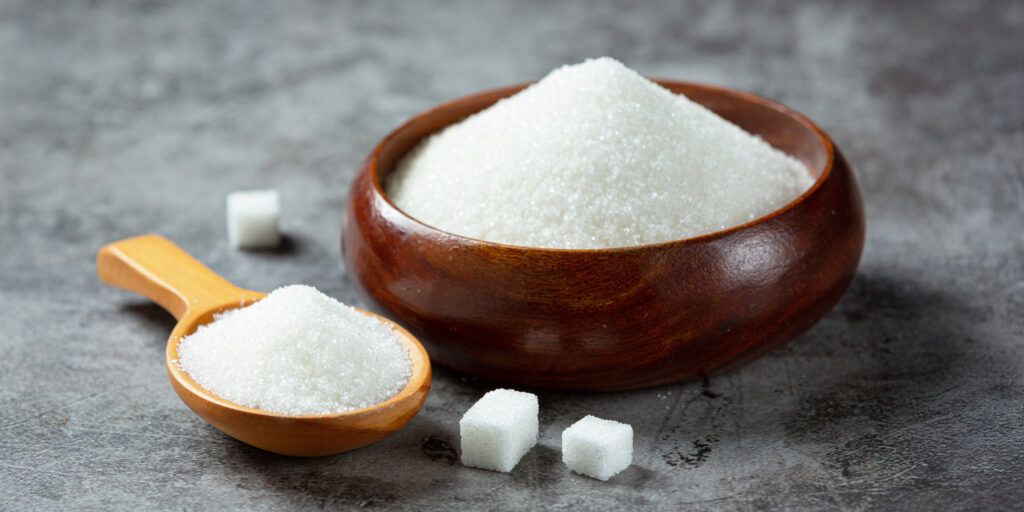
Sugar is one of the most widely consumed food ingredients in the world. It is used in beverages, baked goods, candies, and countless processed foods. Despite its everyday presence, many people are unfamiliar with how sugar is actually produced. The sugar making process is a long and carefully controlled journey that begins in agricultural fields and ends with sparkling white crystals ready for consumption.
Most of the world’s sugar comes from sugarcane, while a smaller portion is produced from sugar beet. This article focuses on the sugarcane based sugar production process, which is common in tropical and subtropical regions.
Harvesting Sugarcane
The process starts with harvesting mature sugarcane. Sugarcane usually takes 12 to 18 months to fully grow, depending on climate and soil conditions. Once the cane reaches peak sugar content, it is harvested either manually using machetes or mechanically with modern harvesters.
Freshness is critical. Sugarcane begins to lose sucrose soon after being cut, so it must be transported quickly to the sugar mill. Delays can reduce sugar yield and affect quality.
Cleaning and Preparation
After arriving at the sugar mill, the sugarcane is washed thoroughly to remove dirt, sand, and plant debris. Clean cane ensures better juice extraction and prevents contamination during processing.
The cleaned sugarcane is then chopped into small pieces to prepare it for juice extraction. This step increases the surface area and helps release the sugar rich juice more efficiently.
Juice Extraction
Juice extraction is one of the most important stages in sugar production. The chopped sugarcane is crushed between heavy rollers in a milling machine. As the rollers press the cane, sugar rich juice flows out and is collected in large tanks.
In some factories, hot water is sprayed over the crushed cane to extract even more juice. The leftover fibrous material, known as bagasse, is not wasted. It is commonly used as fuel to power the sugar mill or to generate electricity.
Juice Clarification
Raw sugarcane juice contains impurities such as plant fibers, soil particles, and proteins. To remove these, the juice undergoes clarification. Lime and heat are added to the juice, causing impurities to clump together and settle at the bottom.
The clarified juice becomes lighter in color and clearer in appearance. This step is essential for producing high quality sugar with a clean taste and consistent color.
Evaporation and Concentration
Once clarified, the juice is sent to evaporators. These large vessels heat the juice to remove excess water. As water evaporates, the juice thickens and becomes a syrup with a high sugar concentration.
Careful temperature control is required during evaporation. Excessive heat can damage the sugar and affect flavor, while insufficient evaporation results in poor crystallization later in the process.
Crystallization of Sugar
Crystallization is where sugar begins to take its familiar solid form. The concentrated syrup is transferred to vacuum pans, where it is further heated under reduced pressure. This allows sugar crystals to form at lower temperatures.
Small sugar crystals are added to the syrup to act as seeds. Over time, these crystals grow as more sugar molecules attach to them. The result is a thick mixture of crystals and syrup known as massecuite.
Centrifugation and Separation
The massecuite is then spun in a centrifuge. This high speed spinning separates the sugar crystals from the remaining liquid, called molasses. The molasses drains away, leaving behind raw sugar crystals.
Molasses is a valuable byproduct and is used in animal feed, ethanol production, and food products. Nothing goes to waste in modern sugar production.
Drying and Packaging
The raw sugar crystals still contain some moisture, so they are dried using hot air in rotating drums. After drying, the sugar is cooled to prevent clumping and then screened to ensure uniform crystal size.
Finally, the sugar is packaged in bags or containers and prepared for distribution. Depending on the intended use, the sugar may undergo additional refining to produce white or specialty sugars.
The sugar making process is a remarkable combination of agriculture, chemistry, and engineering. From harvesting sugarcane in the fields to producing refined sugar crystals, every step is carefully designed to maximize quality and efficiency. Understanding this process helps us appreciate the effort behind one of the world’s most essential food ingredients.