Indian hospitality is deeply rooted in the ancient principle of “Atithi Devo Bhava,” which means “The guest is God.” This tradition reflects the warmth, generosity, and respect that are central to Indian culture and social life.
Meaning and Origins
The concept comes from ancient Hindu scriptures, emphasizing that guests should be treated with the highest level of care and सम्मान. It is not just a social custom but a moral value that guides how people interact with visitors, whether they are friends, relatives, or strangers.
Also See : The Tradition of Fasting in Indian Culture
Practices and Expressions
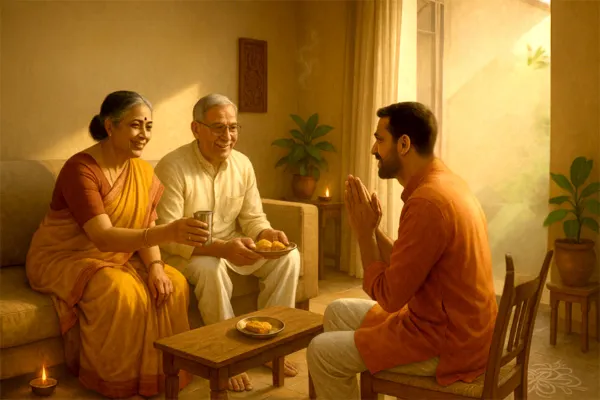
In Indian households, guests are welcomed with great enthusiasm. They are often offered food, drinks, and a comfortable place to stay. Special dishes may be prepared to honor them, and hosts go out of their way to ensure their comfort and happiness.
Role in Modern Society
Even in urban settings, the spirit of hospitality remains strong. It is commonly seen during festivals, family gatherings, and social events, where sharing and caring are emphasized. The tradition also plays a role in India’s tourism, where visitors often experience genuine warmth and friendliness.
Cultural Significance
“Atithi Devo Bhava” highlights the importance of kindness, respect, and human connection in Indian culture. It reinforces social bonds and reflects the country’s values of generosity and inclusivity, making hospitality a defining characteristic of Indian society.