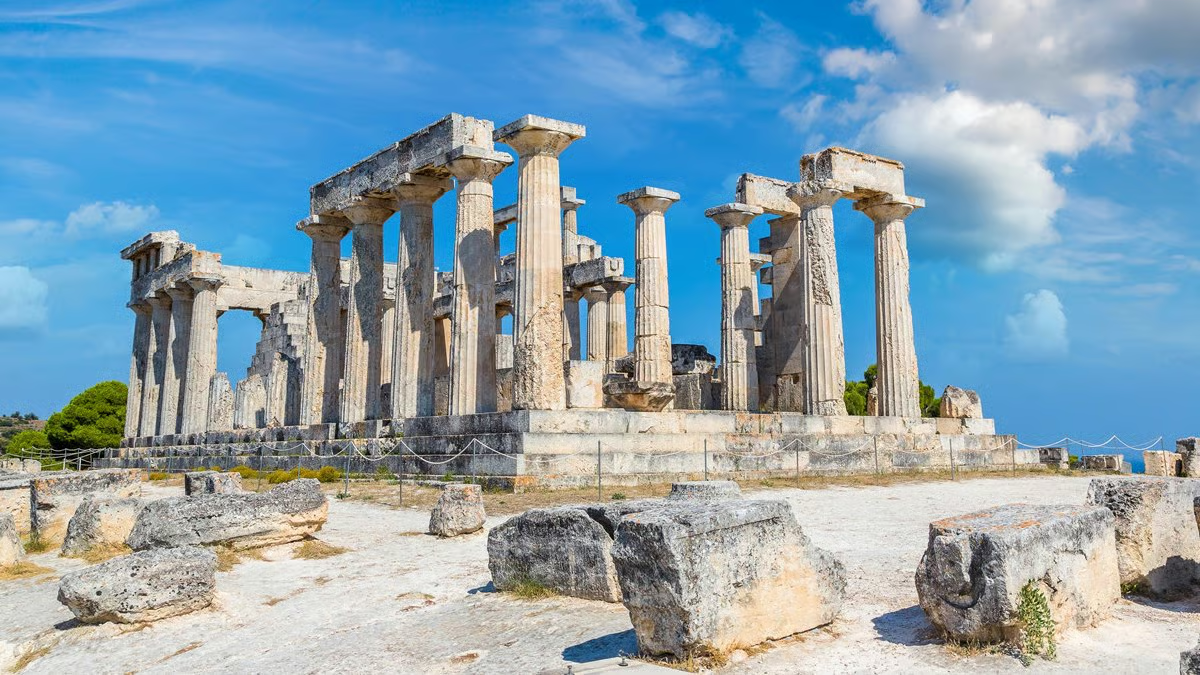
Greece, often hailed as the cradle of Western civilization, boasts a history that spans millennia, influencing art, philosophy, politics, and science worldwide. From the majestic ruins of ancient temples to the resilient spirit of its modern people, the story of Greece is one of innovation, conquest, and enduring legacy. This exploration delves into the key eras that shaped this Mediterranean powerhouse, highlighting pivotal events, cultural milestones, and the timeless allure that draws millions to its shores each year.
Prehistoric Foundations and the Dawn of Civilization
The history of Greece begins in the Stone Age, around 7000 BCE, with early settlements of hunters and gatherers. By the Neolithic period, farming communities emerged, laying the groundwork for organized societies. The Bronze Age (circa 3000–1100 BCE) marked a significant leap, featuring the Minoan civilization on Crete, renowned for its advanced palaces like Knossos, intricate frescoes, and maritime trade networks. The Minoans, named after the mythical King Minos, developed a sophisticated society with plumbing systems and vibrant art depicting nature and daily life.
Following the Minoans, the Mycenaean civilization rose on the mainland around 1600 BCE. These warrior-kings built fortified citadels, such as Mycenae with its iconic Lion Gate, and engaged in epic conflicts immortalized in Homer’s Iliad and Odyssey. The Mycenaeans adopted Minoan influences, including Linear B script, the earliest form of Greek writing. However, around 1200 BCE, a mysterious collapse—possibly due to invasions, earthquakes, or internal strife ushered in the Greek Dark Ages (1100–800 BCE), a time of migration and cultural regression, yet one that preserved oral traditions of heroism and mythology.
The Archaic Period: Birth of City-States and Democracy
Emerging from the Dark Ages, the Archaic Period (800–480 BCE) saw the rise of the polis, or city-state, as the fundamental political unit. Athens, Sparta, Corinth, and Thebes each developed unique systems: Athens leaned toward democracy, while Sparta emphasized military discipline. This era witnessed the colonization of the Mediterranean, spreading Greek culture to Sicily, southern Italy, and beyond. Trade flourished, introducing the alphabet adapted from the Phoenicians, which enabled the recording of epic poems and laws.
Key figures like Solon in Athens reformed society by alleviating debt slavery and establishing a council, paving the way for democracy. Cultural advancements included the Olympic Games, first held in 776 BCE to honor Zeus, fostering pan-Hellenic unity. Art evolved from geometric pottery to lifelike kouros statues, reflecting a humanistic focus. The period culminated in the Persian Wars (490–479 BCE), where Greek city-states, led by Athens and Sparta, repelled invasions at Marathon and Thermopylae, preserving their independence and igniting a golden age.
Classical Greece: The Pinnacle of Philosophy and Art
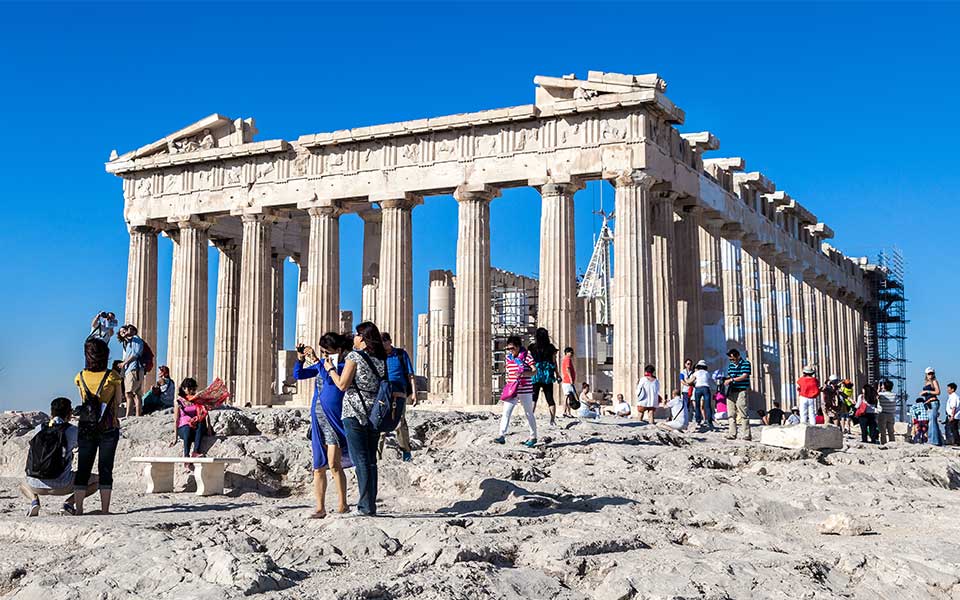
The Classical Period (480–323 BCE) represents Greece’s zenith, particularly under Athenian leadership during the Golden Age (460–430 BCE). Pericles spearheaded the reconstruction of Athens, commissioning the Parthenon atop the Acropolis, a Doric masterpiece dedicated to Athena, symbolizing democratic ideals and architectural prowess. Sculptors like Phidias created idealized forms, embodying harmony and proportion.
Philosophy thrived with Socrates questioning ethics, Plato founding the Academy and authoring The Republic, and Aristotle advancing logic and sciences. Drama flourished in Athens with tragedians Aeschylus, Sophocles, and Euripides exploring human fate, while Aristophanes satirized society in comedies. However, internal conflicts arose: the Peloponnesian War (431–404 BCE) pitted Athens against Sparta, ending Athenian dominance and weakening Greece.
The period closed with Philip II of Macedon’s unification of Greece in 338 BCE, setting the stage for his son Alexander the Great’s conquests.
Hellenistic Era: Global Influence and Cultural Fusion
Alexander’s empire (336–323 BCE) stretched from Greece to India, blending Greek culture with Eastern elements in the Hellenistic Period (323–31 BCE). Cities like Alexandria in Egypt became hubs of learning, with the Library of Alexandria housing vast knowledge. Advances in science included Euclid’s geometry and Archimedes’ principles, while art shifted to realism and emotion, as seen in the Venus de Milo.
Hellenistic kingdoms, ruled by Alexander’s successors like the Ptolemies and Seleucids, spread Greek language and ideas, influencing Rome. This era bridged classical antiquity to the Roman world, with Stoicism and Epicureanism offering philosophies for turbulent times.
Roman Conquest and Byzantine Legacy
Rome conquered Greece by 146 BCE, absorbing its culture while imposing governance. Greek intellectuals tutored Romans, and Hellenic art adorned imperial cities. Under Roman rule, Greece enjoyed peace (Pax Romana), with infrastructure like roads and aqueducts enhancing connectivity.
The Byzantine Empire (330–1453 CE), centered in Constantinople, preserved Greek heritage amid invasions. Orthodox Christianity dominated, with magnificent churches like Hagia Sophia. The empire withstood Arabs and Slavs but fell to the Ottomans in 1453, marking the end of medieval Greek autonomy.
Ottoman Rule and the Path to Independence
Ottoman domination (1453–1821) stifled Greek progress, though communities preserved language and faith through the Orthodox Church. The Enlightenment sparked nationalism, culminating in the War of Independence (1821–1830). Heroes like Lord Byron aided the cause, leading to the establishment of modern Greece in 1830 under King Otto.
The 19th and 20th centuries saw expansion, including the Balkan Wars and World War I, but tragedies like the Asia Minor Catastrophe (1922) displaced millions.
Modern Greece: Challenges and Triumphs
Post-World War II, Greece endured civil war (1946–1949) and military junta (1967–1974), transitioning to democracy in 1974. Joining the EU in 1981 spurred economic growth, though the 2008 crisis tested resilience. Today, Greece thrives on tourism, showcasing sites like Delphi and Olympia, while contributing to global culture through festivals and cuisine.
Greece’s Enduring Impact
Greece’s history is a tapestry of triumphs and trials, from ancient philosophers to modern innovators. Its legacy endures in democracy, Olympics, and art, inviting exploration of its timeless wonders. Whether wandering Acropolis ruins or savoring souvlaki, Greece’s past enriches the present.