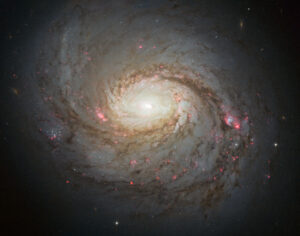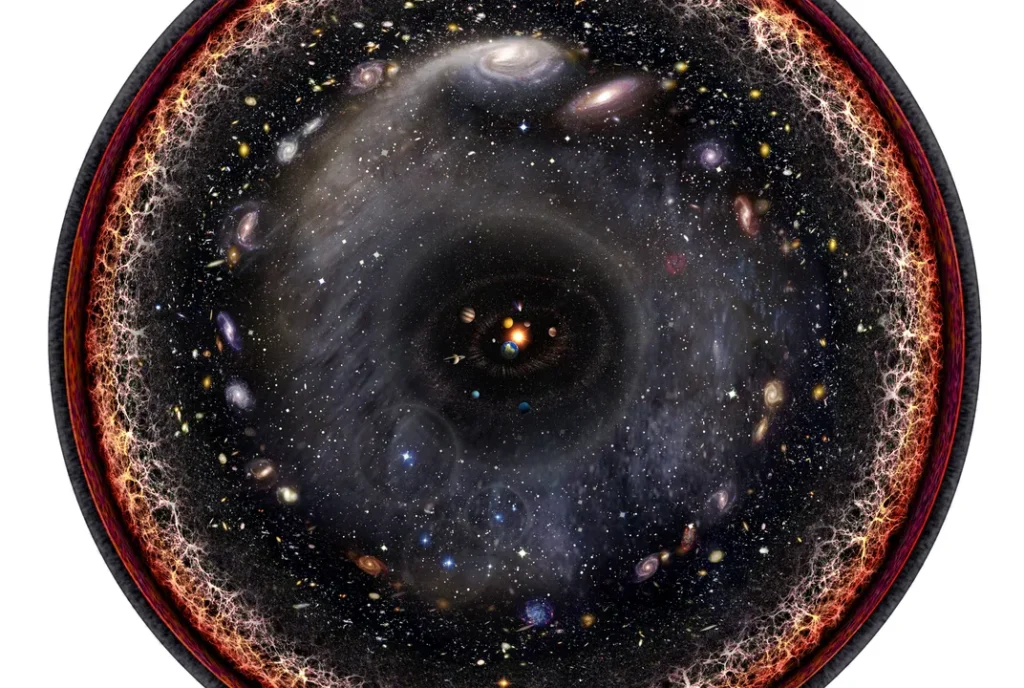
The question “How many galaxies are there in the universe?” has fascinated humanity for centuries, evoking a sense of awe at the cosmos’s scale. Our Milky Way, home to about 100 billion stars, is just one among countless others. But pinning down an exact number is tricky the universe is infinite, yet we can only observe a finite portion. Current estimates for the observable universe range from 200 billion to 2 trillion galaxies, a staggering figure that underscores our infinitesimal place in existence.
This article explores the methods astronomers use to tally galaxies, the challenges involved, and what these numbers reveal about cosmic evolution. We’ll delve into deep-field surveys, theoretical models, and recent discoveries that have revised our counts upward. Optimized for those searching “how many galaxies in the universe,” this informative piece combines science with wonder, helping you grasp the universe’s immensity.
Defining the Observable Universe – The Limits of Our View
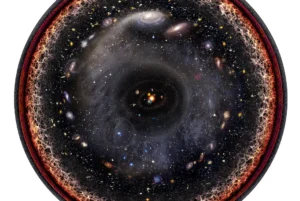
To count galaxies, we must first define our scope: the observable universe. This is the portion of the cosmos from which light has had time to reach us since the Big Bang, about 13.8 billion years ago. Its radius is roughly 46.5 billion light-years, expanded by the universe’s inflation.
Within this bubble, galaxies cluster in filaments and voids, forming the cosmic web. Early estimates in the 1990s suggested around 100 billion galaxies, based on shallow surveys. But deeper observations revealed fainter, more distant ones, pushing numbers higher.
The Hubble Space Telescope’s deep fields, like the Ultra Deep Field, peered into tiny sky patches, revealing thousands of galaxies in what appeared empty. Extrapolating these to the whole sky yields baseline counts, but adjustments for faint, undetected galaxies are crucial.
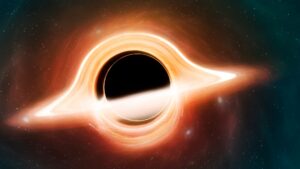
Also See : Black Holes Demystified, Understanding Their Formation and Cosmic Mysteries.
This observable limit means the total universe could be vastly larger perhaps infinite with infinitely many galaxies. But for practical purposes, we focus on what we can see.
Historical Estimates – From Billions to Trillions
Astronomers once thought the Milky Way was the entire universe. Edwin Hubble’s 1920s discoveries showed otherwise, identifying other galaxies. By the 1980s, estimates hovered around 100 billion, based on visible counts.
The Hubble Deep Field in 1995 revolutionized this, imaging 3,000 galaxies in a speck of sky, extrapolating to 50-100 billion overall. The 2004 Ultra Deep Field upped it to 170 billion, capturing light from 13 billion years ago.
A 2016 study by Christopher Conselice analyzed Hubble data, accounting for faint galaxies via gravitational lensing and simulations. It concluded at least 2 trillion galaxies, factoring in those too dim or distant for direct detection. This tenfold increase came from realizing 90% of galaxies are beyond Hubble’s reach without aid.
Recent James Webb Space Telescope observations support this, spotting early, small galaxies that merged into larger ones over time.
Methods for Counting Galaxies – Surveys and Simulations
Counting galaxies involves deep surveys, where telescopes like Hubble or Webb stare at blank sky patches for days, collecting faint light. The Hubble eXtreme Deep Field, for instance, revealed 10,000 galaxies in a area the size of a pinhead at arm’s length.
Extrapolation multiplies these counts across the sky, but corrections for cosmic expansion, dust obscuration, and galaxy clustering are needed. Theoretical models simulate universe formation from the Big Bang, predicting galaxy numbers based on dark matter halos.
Dwarf galaxies, the most numerous, complicate counts they’re faint and often satellites. Estimates suggest they outnumber giants 10:1.
Galaxy mergers reduce counts over time; early universe had more small galaxies that combined.
Challenges and Uncertainties in Galactic Census
Several hurdles make precise counts elusive. Faint galaxies require infrared observations to penetrate dust and redshift. The universe’s expansion stretches light, dimming distant objects.
Dark matter, comprising 85% of matter, influences galaxy formation but isn’t directly observable. Simulations must incorporate it accurately.
The observable universe’s edge poses questions: Are galaxy densities uniform? Clusters like the Virgo Supercluster suggest not.
Future missions like Euclid and Roman Space Telescopes will survey billions, refining estimates to perhaps 6-20 trillion.
What the Numbers Mean for Us
A universe with 2 trillion galaxies, each potentially hosting billions of stars and planets, amplifies the Fermi Paradox—where is everyone? It fuels searches for extraterrestrial life and dark energy studies.
These counts trace cosmic history: More galaxies early on mean a busier, merger-filled past.
Ultimately, the number humbles us, reminding that our galaxy is one in trillions, yet full of potential wonders.
In conclusion, while estimates vary from 200 billion to 2 trillion, the true count in the observable universe likely leans toward the higher end, with ongoing discoveries pushing boundaries. This galactic abundance invites endless exploration.