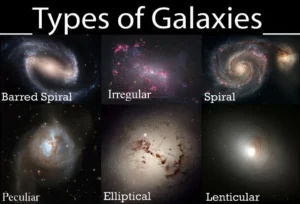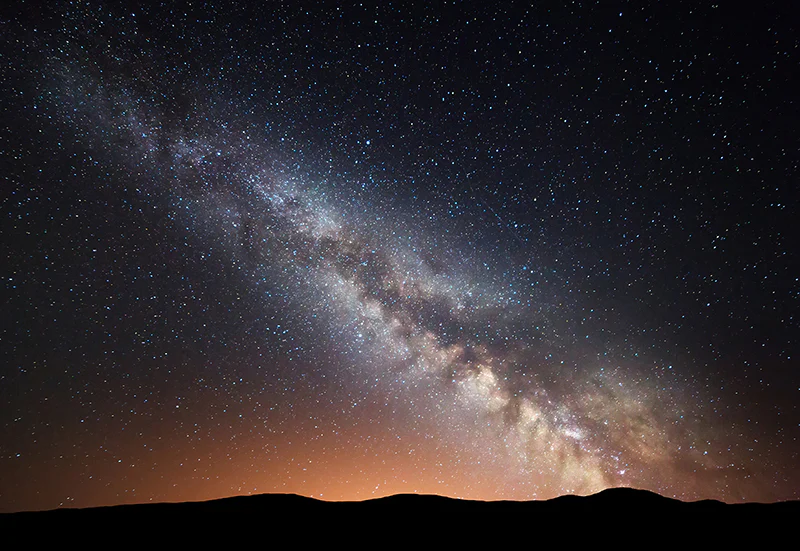
The Milky Way, that shimmering band of light across the night sky, is our home galaxy a vast spiral of stars, gas, and dust where Earth resides. Spanning 100,000 light-years, it contains billions of stars and untold mysteries. Named after its milky appearance from ancient myths, the Milky Way (or Bima Sakti in some cultures) is a barred spiral galaxy. This in-depth exploration covers its structure, history, inhabitants, and how to observe it, offering a comprehensive look at this cosmic wonder.
The Structure and Anatomy of the Milky Way
The Milky Way is a barred spiral galaxy with a central bar of stars crossing the bulge, from which four major arms spiral out: Scutum-Centaurus, Sagittarius, Orion, and Perseus. Our solar system lies in the Orion Arm, about 26,000 light-years from the center.
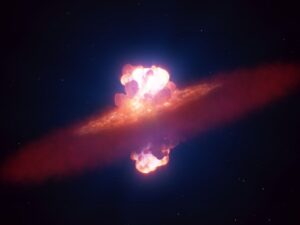
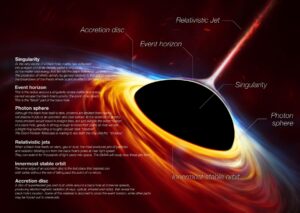
The galactic core houses a supermassive black hole, Sagittarius A*, with a mass of 4 million suns. Surrounding it is a dense bulge of older stars. The disk, flat and rotating, contains young stars, gas clouds, and star-forming regions like the Orion Nebula. A spherical halo of globular clusters and dark matter envelops it, providing gravitational glue.
Dark matter, invisible and comprising 85% of the galaxy’s mass, shapes its rotation. Without it, stars would fly apart. The Milky Way’s total mass is estimated at 1.5 trillion solar masses.
Formation and Evolutionary History
The Milky Way formed 13.6 billion years ago, shortly after the Big Bang, from collapsing gas clouds. Early mergers with smaller galaxies built its structure, as evidenced by stellar streams like the Gaia Sausage—remnants of a devoured dwarf galaxy.
Over time, it cannibalized neighbors, growing through accretion. Recent studies using the Gaia spacecraft map billions of stars, revealing past collisions. The galaxy continues evolving, with star formation peaking in arms where gas compresses.
Stellar Population and Notable Features
Home to 100-400 billion stars, the Milky Way boasts diverse types: hot blue giants in arms, cool red dwarfs everywhere, and exotic objects like pulsars and black holes. The Sun is an average G-type star among them.
Key features include nebulae like Eagle and Carina, where stars are born; supernova remnants like Crab Nebula; and clusters like Pleiades. The galactic center teems with activity, including massive star clusters and infrared emissions from dust.
Dark regions, like the Great Rift, are dust clouds obscuring light. The Milky Way also has satellite galaxies, like the Magellanic Clouds, visible from the Southern Hemisphere.
Life and Habitability in the Galaxy
With billions of planets, the Milky Way likely harbors life elsewhere. The habitable zone varies by star type, but estimates suggest millions of Earth-like worlds. SETI searches for signals, while exoplanet hunts via Kepler and TESS reveal diverse systems.
Challenges include radiation from the core and supernovae, making outer arms safer for life. Our position offers a balance: far enough for safety, close for resources.
Observing the Milky Way: Tips and Best Locations
To see the Milky Way, escape light pollution aim for Bortle Class 1-3 skies. Best viewed in summer from the Northern Hemisphere, winter from Southern. Use apps like Stellarium for timing.
Prime spots include national parks like Death Valley or Atacama Desert. Binoculars enhance views, revealing star clusters. Photography tips: wide-angle lenses, long exposures.
Future of the Milky Way and Ongoing Research
In 4 billion years, it will merge with Andromeda, forming Milkomeda. Current missions like JWST peer into its depths, uncovering hidden stars and gas dynamics.
In essence, the Milky Way is a dynamic, living entity, shaping our understanding of the universe. Exploring it fosters awe and curiosity about our galactic neighborhood.