The universe is far more mysterious than it appears, with visible matter stars, planets, and galaxies comprising only about 5% of its total content. The remaining 95% consists of enigmatic components: dark matter and dark energy. Dark matter, invisible and detectable only through its gravitational effects, holds galaxies together, while dark energy drives the universe’s accelerating expansion. These “dark” elements challenge our understanding of physics and cosmology, fueling ongoing research with telescopes like the James Webb Space Telescope (JWST) and ground-based observatories.
In this comprehensive guide, we’ll explore the nature, evidence, and latest discoveries surrounding dark matter and dark energy. Optimized for searches like “what is dark matter and dark energy,” this article draws on recent 2026 findings to provide an informative overview. Whether you’re a science enthusiast or curious about cosmic secrets, discover how these invisible forces shape our reality and what breakthroughs might lie ahead.
What is Dark Matter? The Invisible Glue of the Cosmos
Dark matter is a hypothetical form of matter that doesn’t interact with light or electromagnetic radiation, making it invisible to telescopes. It exerts gravitational pull, influencing the motion of stars and galaxies. Scientists estimate it makes up about 27% of the universe’s mass-energy density. Unlike ordinary matter, dark matter doesn’t clump into atoms or emit radiation, but its presence is inferred from anomalies in galactic rotation curves stars orbit galaxies faster than visible matter alone can explain.
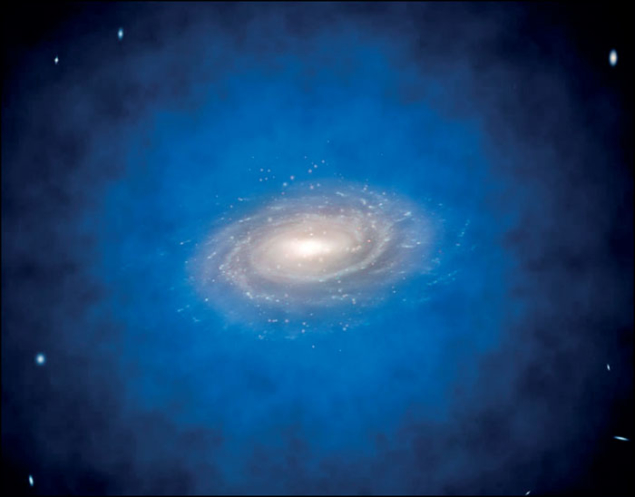
The concept dates back to the 1930s when Fritz Zwicky observed the Coma Cluster’s galaxies moving too quickly for their visible mass. Today, models suggest dark matter forms halos around galaxies, providing the extra gravity needed for stability.
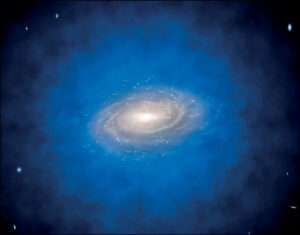
This illustration depicts a dark matter halo enveloping a spiral galaxy, highlighting its invisible yet crucial role.
Candidates for dark matter include weakly interacting massive particles (WIMPs), axions, or even primordial black holes. Experiments like those at CERN and underground detectors search for direct interactions, but none have been confirmed yet.
Evidence for Dark Matter From Galaxies to Cosmic Web
Gravitational lensing provides compelling evidence: massive objects bend light from distant sources, creating distorted images. Galaxy clusters like Bullet Cluster show dark matter’s separation from ordinary matter during collisions, where visible gas interacts but dark matter passes through.
The cosmic microwave background (CMB), the Big Bang’s afterglow, reveals density fluctuations that seeded galaxy formation, requiring dark matter to match observations. Simulations without dark matter fail to reproduce the universe’s large-scale structure—the cosmic web of filaments and voids.
Recent 2026 maps from JWST have unveiled finer details of dark matter distribution, resolving smaller structures and extending mapping to earlier epochs.
communities.springernature.com
Mysterious Signal comes from very Old Stars at the centre of the Milky Way | Research Communities by Springer Nature
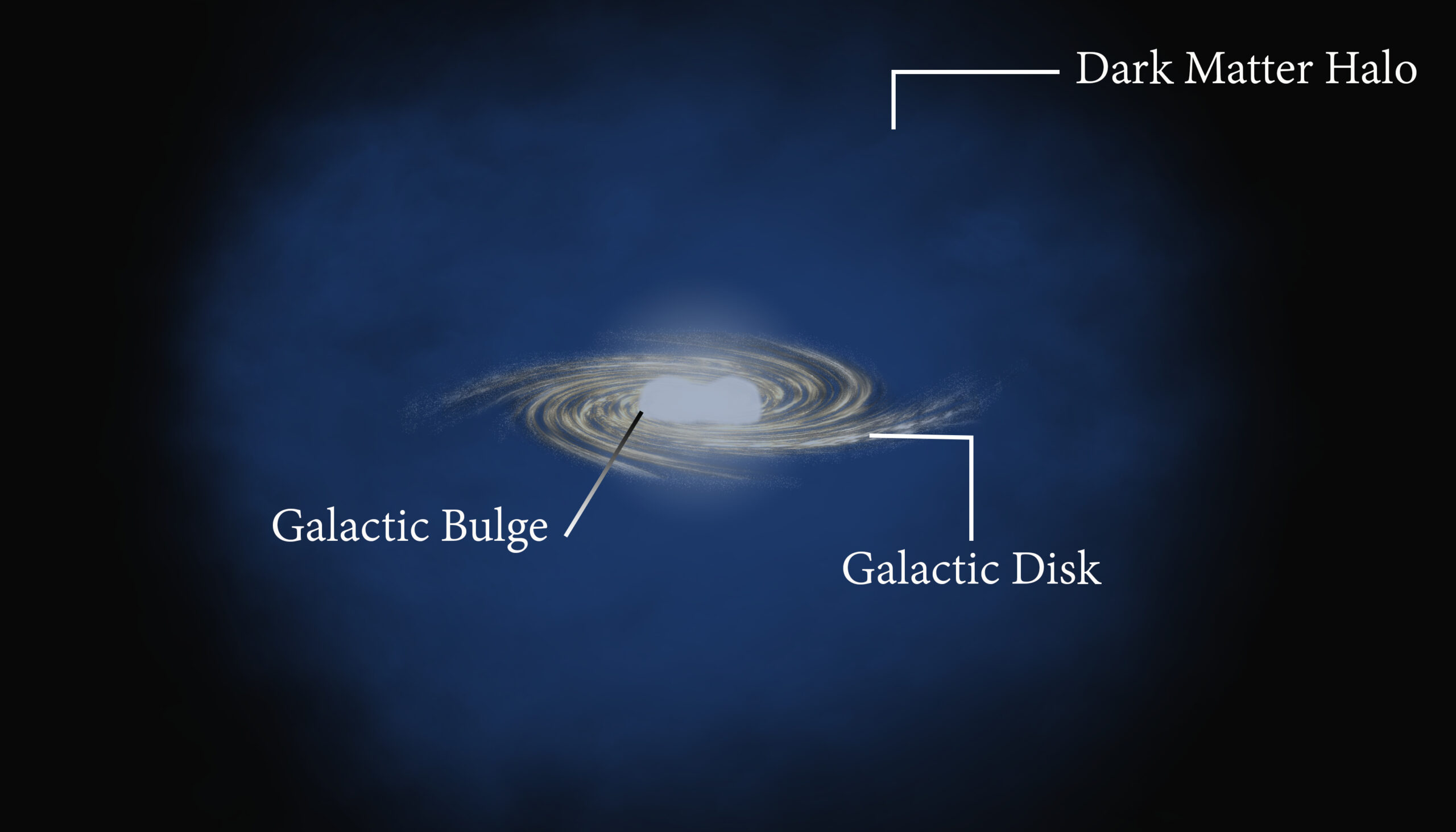
This labeled view shows dark matter’s halo in the Milky Way, emphasizing its galactic influence.
What is Dark Energy? The Force Accelerating Expansion
Dark energy, accounting for about 68% of the universe, is the mysterious force causing the cosmos to expand at an accelerating rate. Discovered in 1998 via distant supernovae appearing fainter than expected, it counters gravity on large scales.
Often modeled as a cosmological constant a uniform energy density in vacuum dark energy could be dynamic, varying over time. If it’s the vacuum energy from quantum fields, its value is puzzlingly small compared to theoretical predictions, known as the “cosmological constant problem.”
Dark energy’s effects are seen in the universe’s flat geometry and the CMB’s patterns. Without it, expansion would slow, leading to a Big Crunch; instead, it propels a “Big Rip” scenario where everything tears apart.
Our Expanding Universe: Delving into Dark Energy | Department of Energy
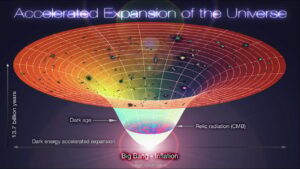
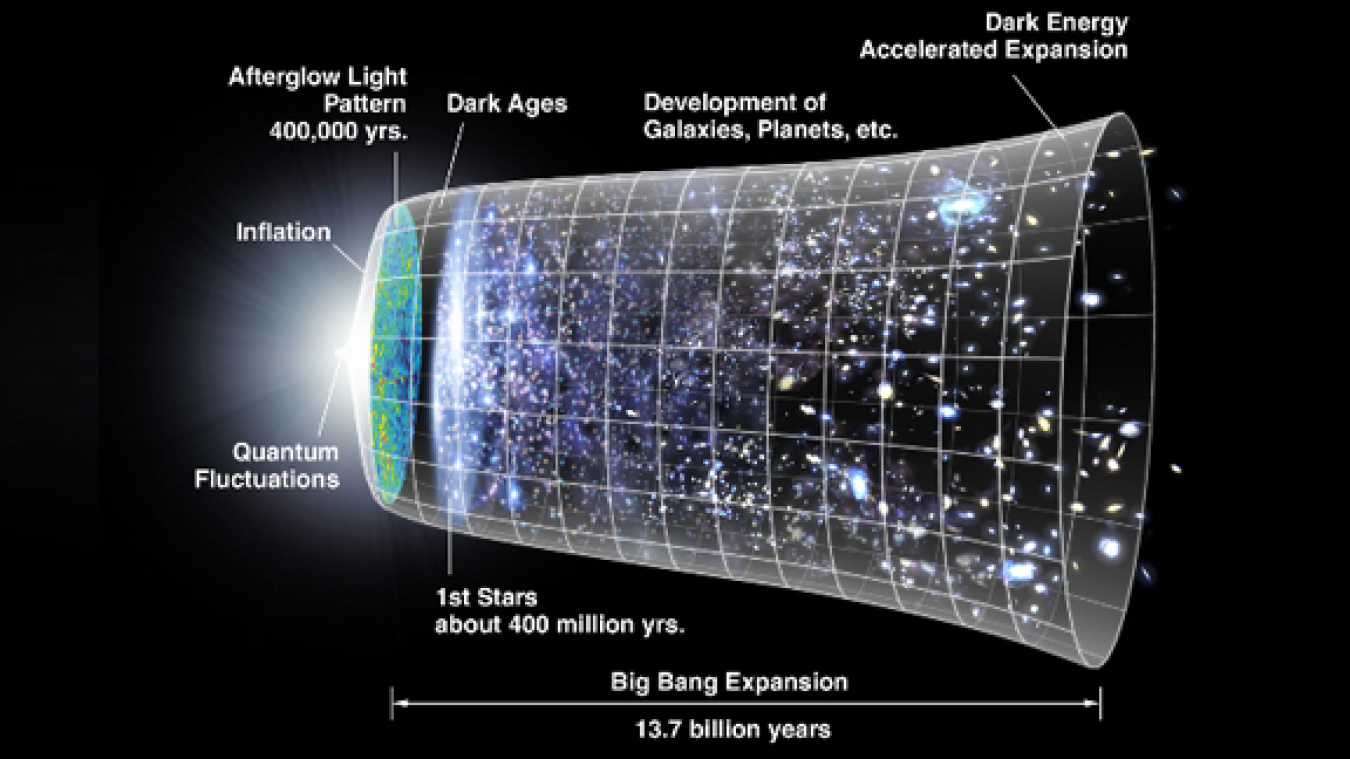
This diagram illustrates dark energy’s role in the universe’s accelerating expansion timeline.
Latest Discoveries: Evolving Dark Energy and New Maps
In 2026, the Dark Energy Survey (DES) released its final six-year analysis, combining weak lensing, galaxy clustering, BAO, and supernovae data for tighter constraints on dark energy. Results suggest dark energy might weaken over time, challenging the constant model. DESI and DES data hint at a negative cosmological constant, implying a future Big Crunch.
For dark matter, JWST’s 2026 map reveals unprecedented clarity in the cosmic web, detecting unseen mass concentrations. Studies question if the Milky Way’s center harbors dark matter clumps instead of just a black hole.
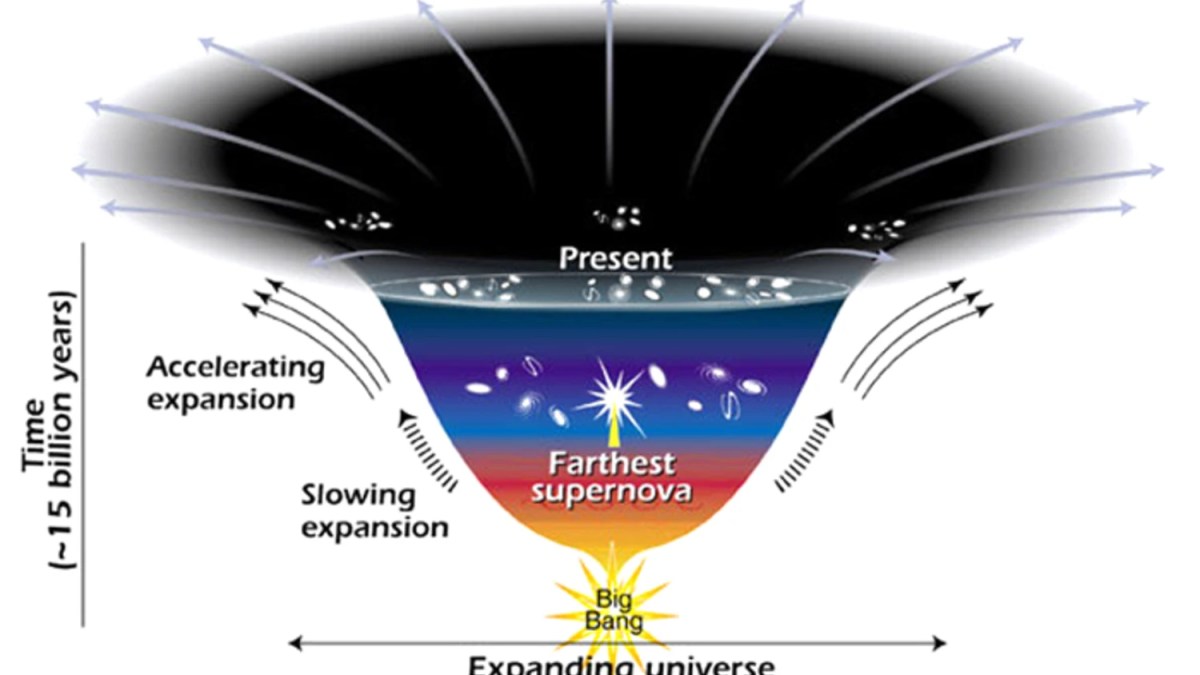
How does dark energy accelerate the Universe?
These findings align with Lambda-CDM but suggest modifications, like energy transfer between matter and dark energy.
Implications Rewriting Physics and Future Missions
Understanding dark matter and energy could unify quantum mechanics and gravity, potentially revealing new particles or dimensions. They influence galaxy formation, black hole growth, and the universe’s fate.
Future missions like Euclid and Roman Space Telescopes will map billions of galaxies, refining models. Particle accelerators and neutrino detectors may detect dark matter signals.
In summary, dark matter and dark energy remain the universe’s greatest enigmas, but 2026 advances bring us closer to illumination. As data accumulates, we edge toward a complete cosmic picture. (Word count: 812)