Vietnamese calligraphy, known as thu phap, is a traditional art form that blends poetry, philosophy, and fine art. Rooted in Confucian values and ancient literary traditions, calligraphy holds a special place in Vietnamese culture. It is often associated with learning, wisdom, prosperity, and spiritual growth.
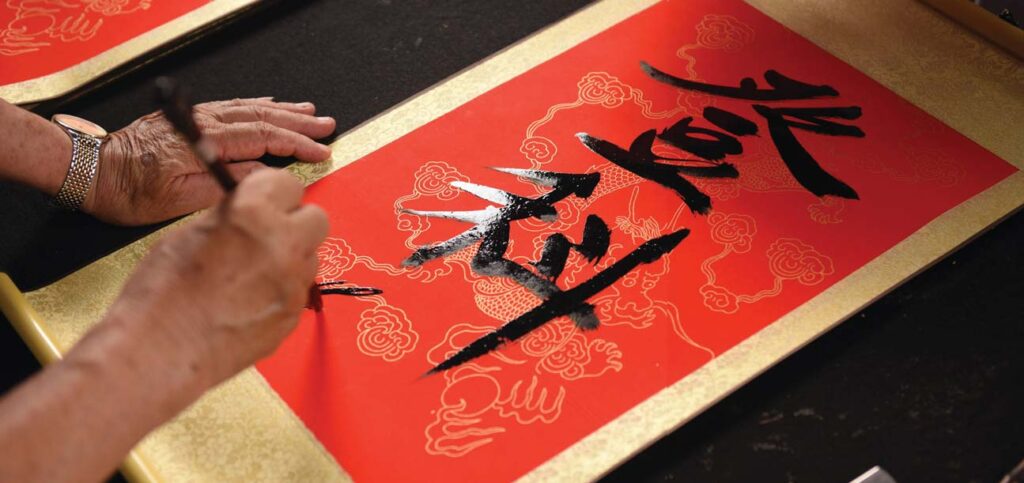
Historically, scholars and mandarins practiced calligraphy using classical Chinese characters. With the development of the modern Vietnamese writing system, calligraphy expanded to include Latin characters, yet the artistic essence remained. The practice of calligraphy is often connected to rituals and cultural celebrations such as Tet. During the Lunar New Year, people visit calligraphy masters at temples or cultural villages to request meaningful words or phrases written on red or yellow paper. These calligraphy works are believed to bring luck, health, success, and happiness for the coming year.
The tools used in calligraphy are simple yet symbolic. A brush, ink, paper, and inkstone form the Four Treasures of the Study. Each tool requires care and skill. The calligrapher must harmonize hand movement, breath, and intention to create each stroke. The result is not merely writing but a visual expression of the writer’s spirit.
Calligraphy styles vary depending on influence and purpose. Some pieces emphasize strength and sharpness, representing determination. Others highlight fluidity and softness, symbolizing harmony and peace. Modern calligraphers often combine traditional techniques with contemporary designs, creating artworks that appeal to young audiences.
Vietnamese calligraphy is more than decoration. It is a reflection of cultural values, intellectual tradition, and the beauty of written language. For visitors, experiencing calligraphy workshops or observing masters at work provides insight into Vietnam’s artistic heritage.