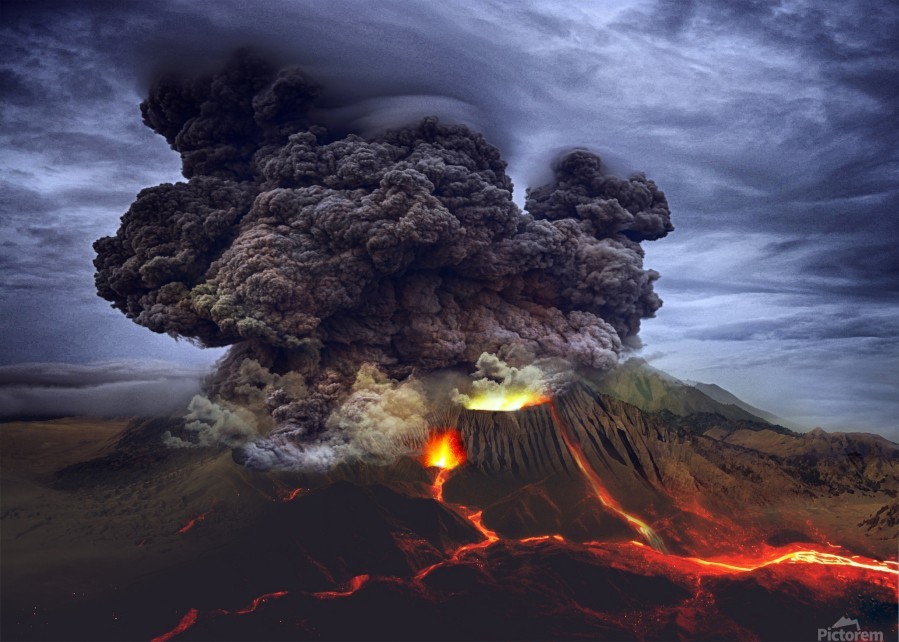
Volcanoes are among the most dramatic natural features on Earth. People travel across continents to witness their beauty, study their activity, or explore the landscapes they have created. Although volcanoes can be destructive, they also shape ecosystems, enrich soil, and create new land. The combination of danger and fascination makes volcanoes one of the most captivating subjects in earth science. Understanding why humans are drawn to volcanoes begins with exploring how they work and why they hold such a powerful influence over our imagination.
What Exactly Is a Volcano
A volcano is an opening in the Earth’s crust where molten rock, gas, and ash escape from beneath the surface. This molten rock, called magma, comes from deep within the mantle. When pressure builds up, magma rises through cracks and eventually erupts. Once magma reaches the surface, it becomes lava.
Volcanoes are commonly found along tectonic plate boundaries, where plates collide, separate, or slide past one another. However, some volcanoes form over hotspots, which are areas where unusually hot mantle material pushes upward, such as in Hawaii.
Types of Volcanoes and How They Differ
Scientists categorize volcanoes into several types, each with unique characteristics.
Shield volcanoes have wide, gently sloping sides created by thin lava that flows easily. They produce frequent but less explosive eruptions.
Stratovolcanoes, also called composite volcanoes, have steep sides and are known for powerful eruptions. Their lava is thicker and traps more pressure, making explosions more violent.
Cinder cone volcanoes are smaller and form from ash, lava fragments, and rocks that pile up around a vent. They often appear as secondary features near larger volcanoes.
Calderas form when a volcano collapses after a massive eruption, creating a large crater that sometimes fills with water.
These variations show how diverse and complex volcanic activity can be.
Why Volcanoes Erupt
Volcanoes erupt because of pressure that builds up beneath the Earth’s crust. Magma contains gas, and when the pressure of this gas increases, it forces its way upward. If the crust above cannot contain the pressure, an eruption occurs.
The intensity of an eruption depends on the composition of the magma. Magma that is rich in silica tends to be thicker and traps more gas, leading to explosive eruptions. Magma with low silica flows more easily, producing gentle lava flows.
Eruptions can release ash clouds, volcanic bombs, and pyroclastic flows. Some eruptions even alter global climate by sending fine particles into the atmosphere that reflect sunlight.
Why Humans Live Near Volcanoes
Despite the risks, millions of people live near active volcanoes. One reason is the fertile soil created by volcanic ash. This soil contains minerals that support agriculture and can produce abundant crops.
Volcanic regions also attract tourism. Beautiful landscapes, hot springs, geysers, and unique rock formations draw visitors from around the world. The economic opportunities from tourism and agriculture often outweigh the perceived dangers.
In some cultures, volcanoes hold spiritual significance. They are seen as powerful natural forces that shape destiny or connect the physical world with the divine. This cultural influence further strengthens the relationship between humans and volcanoes.
Volcanoes and Earth’s Evolution
Volcanoes have played a major role in shaping the planet. They created many of the world’s islands and mountain ranges. Volcanic activity produces new land by depositing layers of hardened lava. Over time, this process has formed entire regions, including the Hawaiian Islands.
Volcanoes also contribute to Earth’s atmosphere. Gases released during eruptions, such as water vapor and carbon dioxide, have influenced climate and atmospheric composition throughout history.
The Allure of Volcanoes in Human Imagination
Volcanoes appear frequently in mythology, art, literature, and modern entertainment. Their unpredictable eruptions symbolize both destruction and rebirth. Many people feel a powerful emotional reaction when watching an eruption or visiting a volcanic landscape.
Psychologists suggest that humans are drawn to volcanoes for the same reasons they are drawn to storms, waterfalls, and deep oceans. These natural forces are massive, uncontrollable, and awe inspiring. They remind us of nature’s power and our small place within it.
The Benefits and Risks of Volcanic Activity
While volcanic eruptions can be deadly, they also bring positive effects. Volcanic regions often have geothermal energy, which provides clean and sustainable power. Minerals created by volcanic activity support industries such as construction and technology.
However, the risks are real. Ash fall can disrupt air travel, lava flows can destroy homes, and pyroclastic flows can move at lethal speeds. Because of these dangers, scientists use advanced monitoring systems to study volcanic behavior and provide early warnings.
How Scientists Predict Eruptions
Although predicting the exact moment of an eruption is difficult, scientists can monitor warning signs. These include ground deformation, increased gas emissions, temperature changes, and tremors. By studying these signals, researchers can estimate the likelihood of an eruption and help communities prepare.
Technology such as satellite imaging, seismographs, and drones has improved the accuracy of volcanic monitoring. This progress saves lives and reduces the impact of eruptions.
Volcanoes are powerful natural forces that shape landscapes, influence cultures, and inspire scientific discovery. Their beauty and danger make them endlessly fascinating. From the creation of new land to the mysteries of magma deep below the surface, volcanoes capture the imagination of everyone who studies or witnesses them. Understanding how they work helps us appreciate their role in Earth’s history and prepare for future activity. Although volcanoes can be destructive, they remain one of the most awe inspiring wonders of the natural world.